1-3-5 Plan
Key ideas
Skill summary
Three quick reminders before you start.
Overview
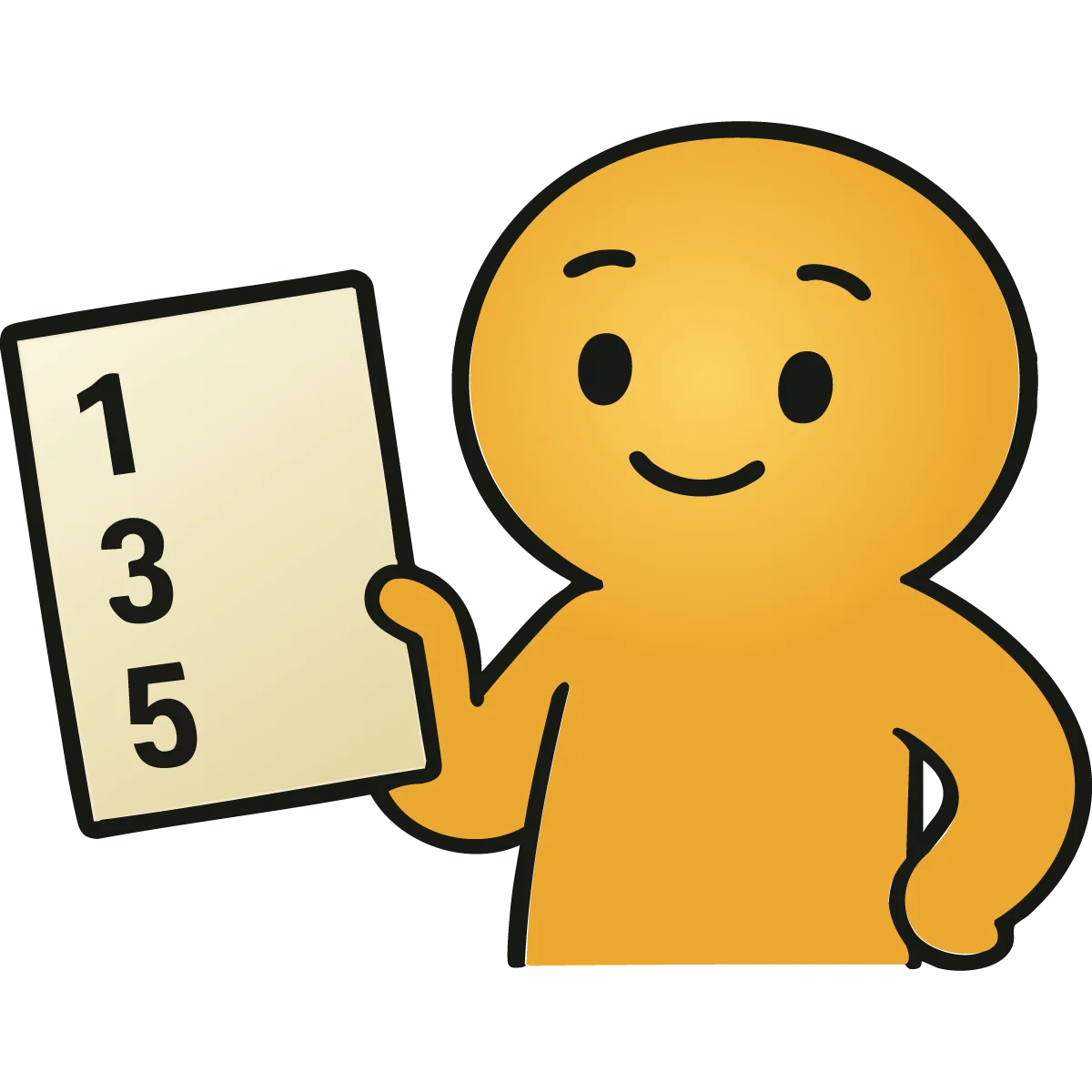
The 1-3-5 Plan is a tool to help you manage your to-do list without feeling like you are drowning. Instead of looking at a massive pile of work and freezing up, you narrow your focus down to just nine items. It is especially helpful if you find it hard to get started or if you often feel scattered.
By choosing what matters most ahead of time, you give yourself a clear path through the day. This method is all about making your workload feel manageable and realistic, so you can actually get things done without the extra stress.
How Your Brain Works
Your brain uses two main parts to manage your feelings and your ability to think clearly.
The Guard Dog
The alarm system. Reacts to stress with fight-or-flight responses.
The Wise Owl
Logic and calm decision-making, best accessed when the alarm quiets down.
The Alarm System
When you look at a huge list of school assignments or chores, your Guard Dog (Amygdala) might start barking. This part of your brain is like a security guard that looks for threats. To the Guard Dog, a long to-do list looks like a giant predator, making you feel stressed, overwhelmed, or even frozen. This is why you might end up scrolling on your phone instead of starting your work. The Guard Dog is just trying to protect you from the "threat" of a heavy workload.
The Wise Leader
Your Wise Owl (Prefrontal Cortex) is the part of your brain that handles planning, making decisions, and staying focused. However, the Wise Owl can only handle so much information at once. If you try to think about twenty things you need to do, the Wise Owl gets tired, which is called decision fatigue. When the Wise Owl is tired, it is much harder to ignore distractions or stay on task.
Finding Balance
The 1-3-5 Plan helps these two work together. By limiting your day to just nine tasks, the Guard Dog stops seeing your list as a threat and calms down. This clears the way for the Wise Owl to take charge. Instead of wasting energy trying to figure out what to do next, your Wise Owl can focus all its power on actually doing the work. This structure helps you stay on track and feel more in control of your time and your behaviour throughout the day.
How to Use This Skill
Imagine your day is like a backpack. If you try to shove everything you own into it, you won't be able to carry it. The 1-3-5 Plan helps you pack only what you need to keep moving.
The Brain Dump
Write every single task down on a scrap of paper so you can see them clearly and stop worrying you will forget them.
Pick Your 1 Big Task
Pick the one thing that will make the biggest difference, like writing the intro for an essay that is due soon.
Choose 3 Medium Tasks
Choose three things that take a bit of effort, such as researching two sources or tidying a specific corner of your room.
Add 5 Small Tasks
Add five quick chores like sending a text, hole-punching papers, checking your email, or packing your bag for tomorrow.
Real-Life Example
Conquering the Project Pile
The Project Panic
You get a notification that a huge group project is due this Friday and you haven't started yet.
The Guard Dog Thought
I have way too much to do and no time to do it. I am going to fail this and let my whole team down.
The 1-3-5 Breakdown
- Write down every single tiny thing needed for the project.
- Select one big task: Outline the three main sections of the project report.
- Pick three medium tasks: Find three research sources, draft the first slide, and message the group chat to check in.
- List five small tasks: Check the project rubric, title the document, format the bibliography, save the file, and clear your desk workspace.
By focusing on just nine things, the Guard Dog stops panicking and the Wise Owl gets to work. You finish the work early and feel much calmer and more accomplished.
Practice Tips
To make this habit stick, consider trying these simple adjustments to your routine.
- Use Visuals
Try using a whiteboard or a colourful app. Seeing your plan outside of your head helps the Wise Owl stay in charge and lowers your mental load.
- Weekly Check-in
Take fifteen minutes on Sundays to look at your priorities. This prevents you from feeling rushed or surprised when Monday morning arrives.
- Be Flexible
On low-energy days, it is okay to change it to a 1-2-3 plan. The goal is making progress, not being perfect every single time.
Pro Tip
Why It Works
This skill is great for keeping your focus sharp and your stress levels low by making big goals feel smaller and more manageable.
This method helps your brain stay organized because:
- Less Stress
It keeps the Guard Dog quiet by making your day look achievable instead of scary.
- Better Focus
It saves the Wise Owl's energy for doing work rather than just deciding what to do next.
- Small Wins
Completing the five small tasks provides a sense of achievement that keeps you motivated to finish the rest.
References
Research-based evidence supporting this skill
- Research shows that writing tasks down and prioritizing them reduces the mental load on our working memory, which helps us stay calm and focused.
- Desklog. (n.d.). What is 1-3-5 Rule and how can it boost your productivity. Retrieved from
- Hubstaff. (n.d.). 1-3-5 Rule for Productivity: Strategies and Examples. Retrieved from
- Lark. (n.d.). What is the 1-3-5 Rule in the Context of Productivity?. Retrieved from
- One Quiet Mind. (n.d.). What Is the 1-3-5 Rule for ADHD?. Retrieved from
- Paperlike. (n.d.). The 1-3-5 Rule: A Simple Trick to Prioritize Your Day. Retrieved from
- Quietly Conquer. (n.d.). The 1-3-5 Rule: Daily Productivity Made Simple. Retrieved from
- The Focused Method. (n.d.). The 1-3-5 Rule: A Simple Way to Plan Your Day. Retrieved from
- TrackingTime. (n.d.). Unlock Productivity with the 1-3-5 Rule. Retrieved from