Accountability Text
Key ideas
Skill summary
Three quick reminders before you start.
Overview
Accountability Texting is a helpful strategy where you send a quick message to a friend about a task you plan to start. By sharing your intention, you make your goal feel more real and create a healthy sense of commitment. This technique uses your social connections to help you focus on your tasks and follow through on your plans.
It is especially useful for those times when you feel stuck or keep putting things off. Instead of trying to find motivation on your own, you involve a trusted person to help you stay accountable in a way that feels supportive and easy.
How Your Brain Works
Your brain uses two main parts to manage your feelings and your ability to think clearly.
The Guard Dog
The alarm system. Reacts to stress with fight-or-flight responses.
The Wise Owl
Logic and calm decision-making, best accessed when the alarm quiets down.
The Social Alarm
The Guard Dog (Amygdala) is the part of your brain that is very sensitive to social expectations. It cares about your reputation and how you interact with your friends. When you keep a goal to yourself, the Guard Dog might stay quiet, allowing you to get distracted by your phone or other fun activities. However, when you send a text to a friend saying you will start a task, the Guard Dog wakes up. It creates a small, healthy amount of social pressure because it does not want you to let your friend down. This alert system helps you stay mindful of your commitment.
The Wise Owl Takes Charge
This social awareness gives the Wise Owl (Prefrontal Cortex) the green light to take control. The Wise Owl is the part of your brain responsible for planning, making good decisions, and staying focused. When you make a social promise, the Wise Owl uses that commitment to override the urge to procrastinate. It helps you organize your steps and keep your attention on the job at hand. By involving a friend, you are essentially giving your Wise Owl a boost to help it manage your behaviour more effectively.
The Reward Loop
- Social Bond: Texting creates a sense of connection, making you feel less alone in your work.
- Focused Action: The Wise Owl finds it easier to ignore distractions when a social expectation is in place.
- Dopamine Boost: When you finish the task and send a "done" message, your brain releases dopamine. This is like a natural high-five that makes you feel proud and strengthens your habit for next time.
How to Use This Skill
Using this skill is like having a teammate for your brain. It helps your Wise Owl stay in the lead while the Guard Dog watches your back.
Pick your task and set a timer
Decide you will start your biology homework in 15 minutes and set a reminder on your phone.
Text a friend the plan
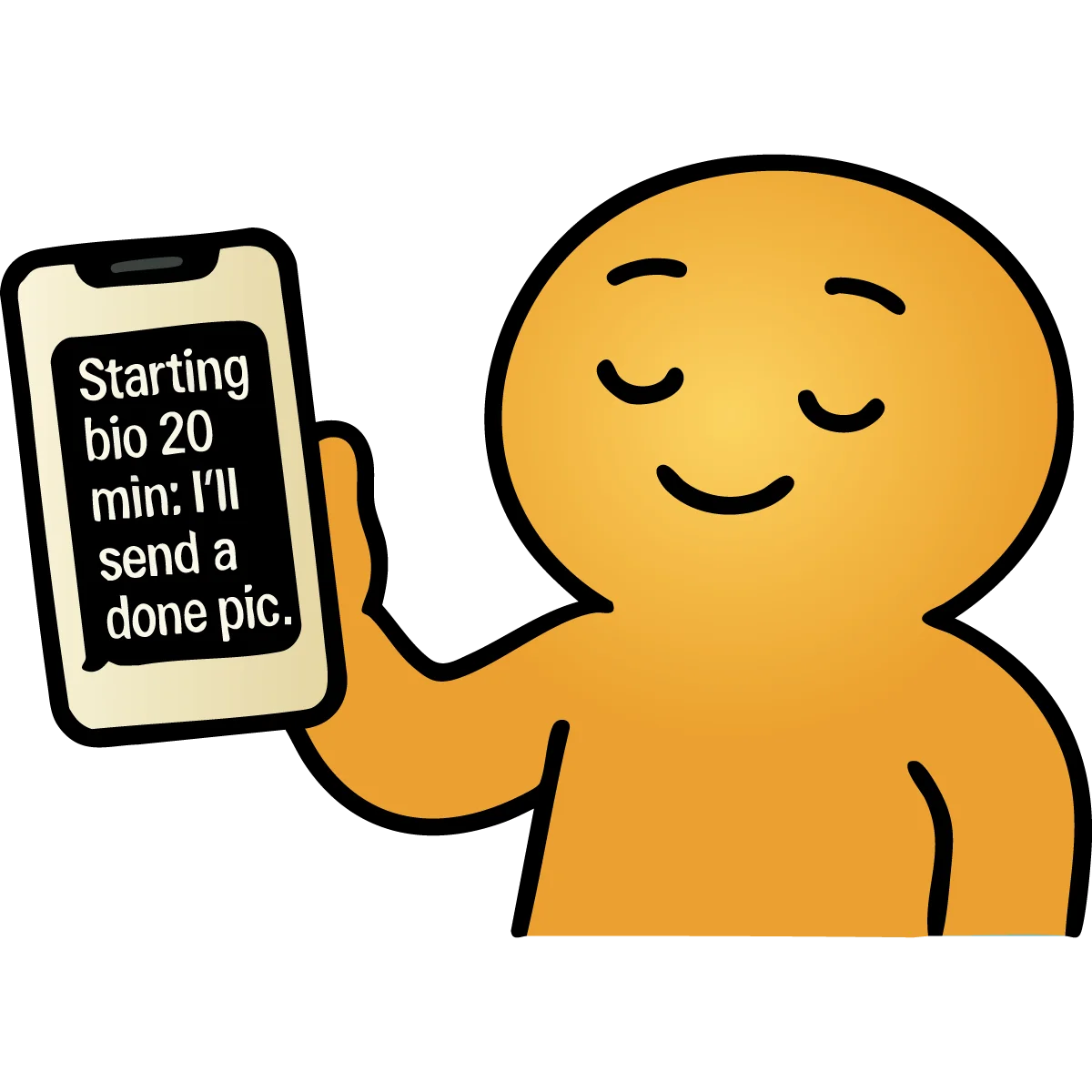
Message a friend: "I am starting my biology sketches at 4:00 PM. I will send you a photo when I am finished!"
Send a "done" photo
Once you finish the sketches, snap a quick photo and text it to your friend to show you are done.
Real-Life Example
Beating the Homework Stall
The Distraction Trap
A student is scrolling through social media while their biology textbook sits unopened on the desk nearby.
The Guard Dog Bark
I am never going to get this done, so I might as well keep scrolling. It is too much work.
Taking Action
- The student notices they are procrastinating and decides to use an Accountability Text.
- They pick a supportive friend and send a message: "Starting my biology homework now. Sending a pic in 30 mins."
- The friend replies with a quick "You got this!"
- Knowing someone is waiting for the photo, the student puts the phone away and starts working.
- Thirty minutes later, they finish the first page, take a photo, and send it.
The Wise Owl takes over the focus, the homework gets finished, and the student feels a sense of success instead of anxiety.
Practice Tips
- To get the most out of this technique, keep these helpful tips in mind
- Focus on the action
Text about starting a task rather than just the final result. It is easier for the brain to focus on the next step.
- Pick a caring friend
Choose someone who is supportive and low-pressure. This makes the commitment feel helpful rather than stressful.
- Keep it consistent
The more often you use this tool, the more your brain will naturally lean on the Wise Owl when things get tough.
Pro Tip
Why It Works
This technique is a great way to use your social nature to boost your productivity and confidence.
This skill can help you because:
- Builds Connection
It turns a lonely task into a shared goal with a friend.
- Reduces Stress
It helps calm the Guard Dog by providing a clear plan and support.
- Improves Focus
It gives the Wise Owl the extra strength it needs to ignore distractions.
References
Research-based evidence supporting this skill
- This method is based on the Supportive Accountability Model, which shows how human connection and social expectations can help us stay committed to our goals.
- Evidence-Based Mentoring. (n.d.). Phone call or text?: New study explores youth's responses to supportive accountability. Retrieved from
- Mohr, D. C., Cuijpers, P., & Lehman, K. (2011). Supportive Accountability: A Model for Providing Human Support to Enhance Adherence to eHealth Interventions. Journal of Medical Internet Research, 13(1), e30.
- Psychology Today. (2025). The Power of Accountability in Positive Change. Retrieved from