Ask for Support
Key ideas
Skill summary
Three quick reminders before you start.
Overview
Asking for support is a way to handle tough moments by connecting with the people around you. It involves recognizing when things feel heavy and letting someone else in to help carry the load for a bit.
This skill helps you build a network of people you trust, making it easier to bounce back from stress. Instead of trying to handle every problem by yourself, you learn to ask for exactly what you need in a way that feels safe and manageable.
How Your Brain Works
Your brain uses two main parts to manage your feelings and your ability to think clearly.
The Guard Dog
The alarm system. Reacts to stress with fight-or-flight responses.
The Wise Owl
Logic and calm decision-making, best accessed when the alarm quiets down.
The Alarm
When you feel overwhelmed or stressed, your brain's Guard Dog (the amygdala) starts barking. It is looking for threats and gets your body ready to fight, run, or hide. This can make you feel anxious or like you want to pull away from everyone, flooding your system with stress chemicals.
The Wise Owl
When you decide to ask for help, you wake up your Wise Owl (the prefrontal cortex). This is the part of your brain that thinks logically and plans ahead. By reaching out, the Wise Owl tells the Guard Dog that it is okay to settle down. This shift helps you see your problems from a different perspective.
The Brain Connection
Connecting with a friend releases a chemical called oxytocin. Think of this like a hug for your brain. It helps lower stress chemicals like cortisol and makes you feel more secure and trusted. This process strengthens your emotional resilience and helps you feel more empowered without needing to change everything at once.
How to Use This Skill
Think of this skill like sending a signal flare to your team when the Guard Dog is getting too loud and you need a bit of backup.
Pick Your Person
Text a trusted friend or family member. This simple act of choosing a person can start to lower your body's stress levels.
Be Specific
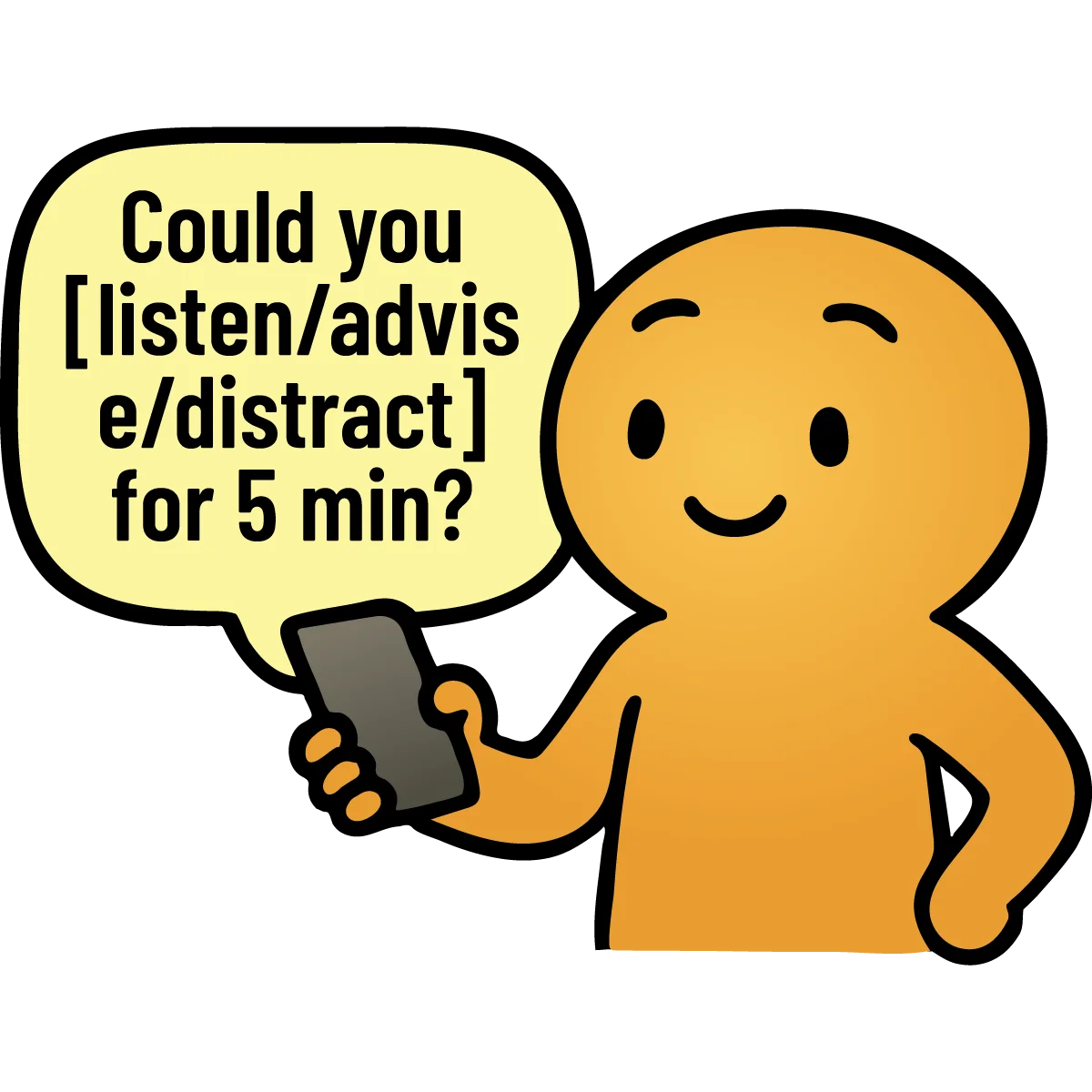
Ask for exactly what you need, like: "Could you just listen for a bit?" or "Can you distract me with a funny story?"
Set a Timer
Say: "Do you have 5 minutes to chat?" This creates a safe boundary for both you and your friend.
Real-Life Example
The Math Test Meltdown
The Stress Spike
You get a failing grade on a math test. Your heart starts racing, your chest feels tight, and you feel a wave of panic.
The Guard Dog's Panic
I am a total failure. No one cares about me, and I am going to have to handle this mess all by myself.
The Breakdown
- Notice the bark: Realize the Guard Dog is panicking about the test score and making you feel alone.
- Reach out: Send a quick text to a friend: "Hey, can you listen for 5 minutes? I am really stressed about math."
- The Connection: The friend listens and validates your feelings, which helps you feel heard.
- The Shift: Your breathing slows down as your Wise Owl helps you reframe the failure as a temporary setback.
Anxiety drops and the feeling of isolation eases. You feel empowered to study again rather than spiralling into a bad mood.
Practice Tips
- You can get better at reaching out by practicing when things are calm. Consider trying these ideas
- Prep a script
Write down a few ways to ask for help in advance so you do not have to think hard when the Guard Dog is barking.
- Start with small things
Practice asking for low-stakes support, like a movie recommendation, to get used to the feeling of reaching out.
- Follow up with thanks
Thanking the person afterward helps build a stronger bond and keeps the positive connection going for both of you.
Pro Tip
Why It Works
This technique builds your internal strength and helps you feel more connected to the people you care about.
This skill helps because:
- Stress Buffer
It lowers the stress chemicals in your body and helps your calming system take over so you can recover faster.
- Clear Communication
Telling people exactly what you need makes it much easier for them to support you without feeling overwhelmed.
- Bravery in Vulnerability
Choosing to take care of yourself builds your self-esteem and reminds you that your well-being matters.
References
Research-based evidence supporting this skill
- This technique is based on research from mental health experts and peer support models that show social connection is a powerful tool for managing distress and improving emotional resilience.
- Compass Health Center. (n.d.). How to ask for mental health help.
- White, S., et al. (2020). The effectiveness of one-to-one peer support in mental health services: A systematic review and meta-analysis. BMC Psychiatry, 20, 534.
- Family Psychiatry and Counseling. (n.d.). Mental health: Embracing and asking for help for your well-being.
- Stanford University. (2022). Asking for help is hard, but people want to help more than we realize.
- Cenikor. (n.d.). How asking for help eases anxiety and mental health struggles.
- Orchard Mental Health. (n.d.). The importance of asking for help for mental well-being.
- Substance Abuse and Mental Health Services Administration (SAMHSA). (n.d.). Mental health, drugs and alcohol: How to ask for help?
- Mental Health First Aid. (n.d.). The importance of having a support system.
- Mental Health Foundation. (n.d.). Our best mental health tips - backed by research.