Cornell Notes
Key ideas
Skill summary
Three quick reminders before you start.
Overview
Cornell Notes is a way to set up your notebook so your brain can handle a lot of information at once without getting stressed. Developed at Cornell University, it uses a specific layout to help you listen better in class and study smarter at home. Instead of just writing down everything a teacher says, you create a system that makes it easy to test yourself later.
How Your Brain Works
Your brain uses two main parts to manage your feelings and your ability to think clearly.
The Guard Dog
The alarm system. Reacts to stress with fight-or-flight responses.
The Wise Owl
Logic and calm decision-making, best accessed when the alarm quiets down.
The Alarm
When you are sitting in a lecture and the information starts coming too fast, your Guard Dog (the amygdala) can start to bark. This part of your brain is looking for threats, and being overwhelmed by messy notes feels like a threat. This can lead to stress, making it harder to focus or remember what you are hearing.
The Shift
By using a structured page, you give your brain a sense of order. This calms the Guard Dog down because it sees a clear plan. When the Guard Dog is quiet, the Wise Owl (your prefrontal cortex) can take over. The Wise Owl is the part of your brain that handles deep thinking, solves problems, and helps you stay organized.
Building Memory
The Wise Owl uses the different sections of the Cornell page to build stronger connections in your mind.
- Writing notes in your own words helps you pay attention.
- Creating cue questions forces your brain to practice finding information.
- Writing a summary helps your brain see the big picture.
- These steps create a pathway that makes it much easier to recall information when you are sitting in a test.
How to Use This Skill
Think of Cornell Notes like a map for your brain. It helps the Wise Owl find the right path through a forest of new information without getting lost.
Set the Stage
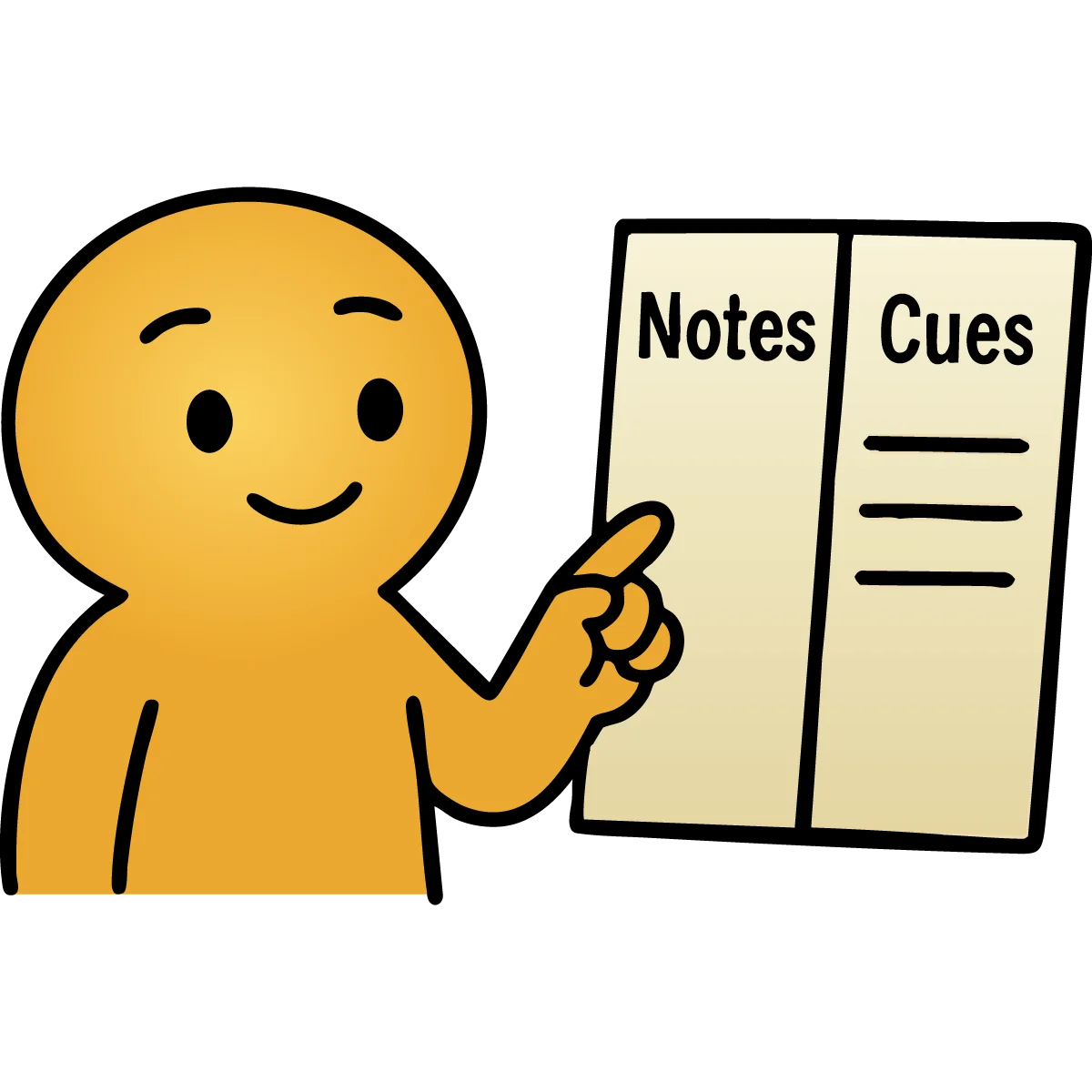
Draw a vertical line 30 percent from the left and a horizontal box at the bottom. This separates your main notes from your study cues.
Catch the Ideas
Write your main notes in the large right column. Use abbreviations and bullet points to keep things simple and easy to read.
Create the Clues
To turn your notes into a self-test tool that you can use for quick review.
The Big Picture
Write a three line summary at the bottom of the page that explains the whole lesson in your own words.
Real-Life Example
Taming the Biology Tsunami
The Information Overload
A high school student sits in biology class. The teacher is talking fast about cell division and the page is filling up with confusing words.
The Guard Dog Bark
The student thinks, I will never remember all of this for the test, there is just way too much info!
Taking Control
- Divide the Page: The student draws their lines before the teacher starts.
- Capture Points: They write 'Mitosis' and the main steps in the right column.
- Add Cues: After class, they write 'What are the stages?' in the left column.
- Summarize: They write a brief note at the bottom: 'Cells divide to help us grow and fix injuries.'
- Self-Test: They cover the notes and use the cues to quiz themselves.
Because the Wise Owl was in charge of the notes, the student felt calm and confident. They remembered more for the quiz and did not have to panic or cram at the last minute.
Practice Tips
Try these simple habits to make your study time much more effective.
- The 24-Hour Rule
Add your cues and summary within a day of the class. This helps lock the information into your memory before you start to forget it.
- Cover and Quiz
Cover the right side of your page and try to answer the questions on the left. This is much better for your brain than just reading the notes again.
- Doodle and Draw
Add small drawings or symbols in your notes. Your brain loves to process pictures and words at the same time.
Pro Tip
Why It Works
This method helps you stay organized, reduces stress, and makes studying much more efficient.
This skill can help you because:
- Lower Stress
It stops you from feeling overwhelmed by keeping your notes organized and clear.
- Better Memory
The self-testing part of the system makes it much easier to remember facts for a long time.
- Saves Time
Because you are reviewing as you go, you do not need to spend hours cramming right before a big test.
References
Research-based evidence supporting this skill
- Recent educational studies show that students who use structured note-taking methods like this one often get better grades and feel more confident in school.
- California Coast University. (n.d.). A simple, effective note-taking technique: The Cornell method.
- BV Associates. (n.d.). Mastering note-taking with the Cornell method: A study aid.
- Zulffikar, H. (2021). The effect of the Cornell method on the quality of grade production and learning performance. Pedagogical Research.
- Herzing University. (n.d.). Improve your note-taking skills with the Cornell method.
- Sage Journals. (2022). An introduction to the Cornell note system.
- Cornell University. (n.d.). Take note: Popular study method has 'Cornell' written all over it.
- Themba Tutors. (n.d.). The Cornell note-taking method, explained.
- Thesis Whisperer. (2018). The Cornell note-taking method: Revisited.