Evidence Board
Key ideas
Skill summary
Three quick reminders before you start.
Overview
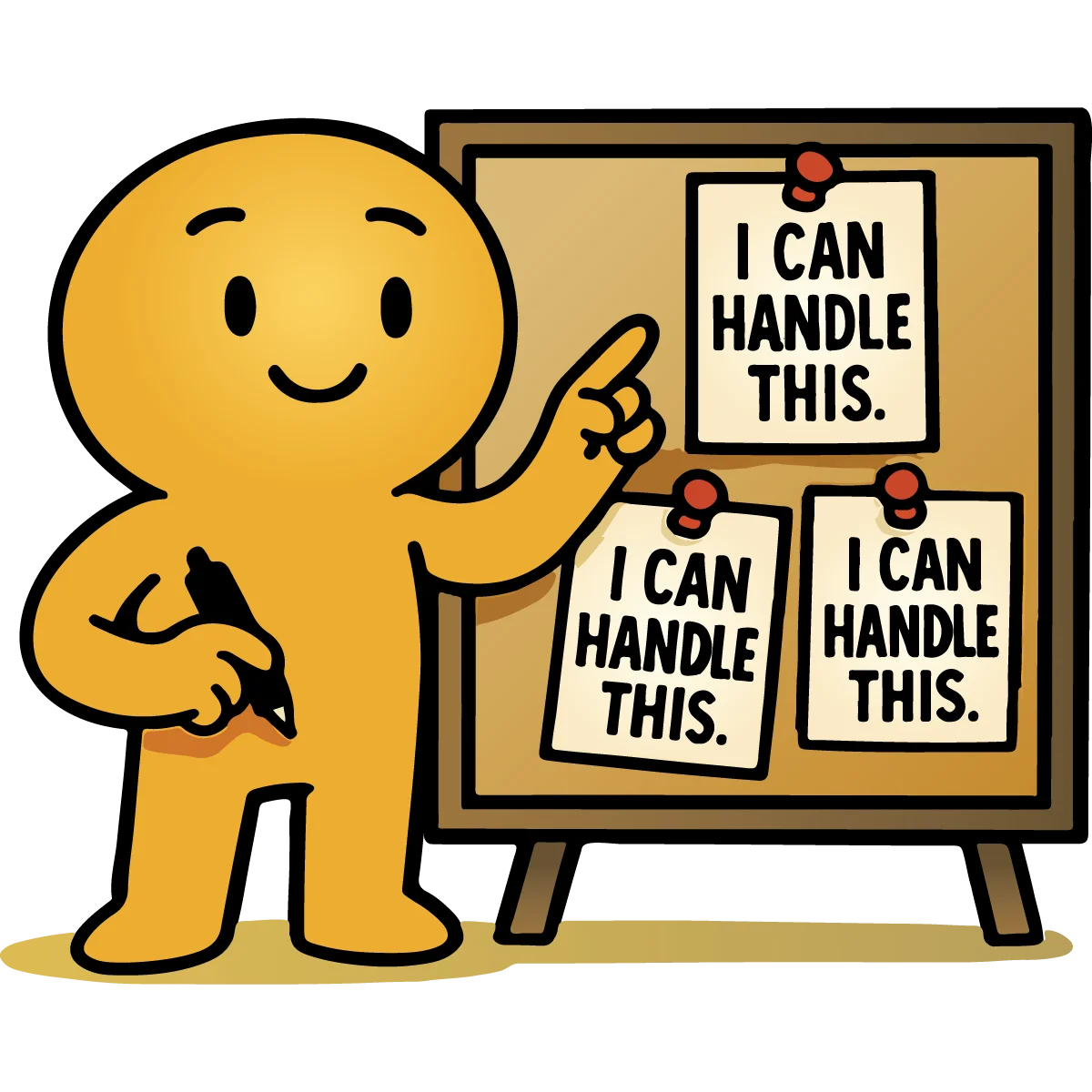
The Evidence Board is a helpful way to remind your brain that you are capable of handling tough times. It involves looking back at three specific times you succeeded in the past to help you feel more confident about a challenge you are facing today. This helps shift your focus from feeling stuck to feeling ready for whatever is happening next. It is based on well-known ways of thinking that help people manage stress and build trust in their own abilities.
How Your Brain Works
Your brain uses two main parts to manage your feelings and your ability to think clearly.
The Guard Dog
The alarm system. Reacts to stress with fight-or-flight responses.
The Wise Owl
Logic and calm decision-making, best accessed when the alarm quiets down.
The Alarm System
- Your Guard Dog (Amygdala) is always looking for trouble. When things get hard, it starts barking, making you feel anxious or like you want to run away.
- This sends a stress signal through your body, which can make it hard to think clearly. It is your body's way of trying to protect you, even when there is no real danger.
The Evidence Check
- Your Wise Owl (Prefrontal Cortex) is the part of your brain that looks at facts and solves problems.
- When you list past successes, you are giving the Wise Owl proof that you can handle stress. This helps the Wise Owl take charge and calm the situation down.
Making the Switch
- The Wise Owl talks to the Hippocampus to find specific memories of when you were brave, calm, or successful.
- By focusing on these real facts, you strengthen the connection between the parts of your brain that help you stay in control. This makes it easier to handle future challenges because you have trained your brain to look for your strengths.
How to Use This Skill
Think of this like building a legal case for your own strength. You are gathering proof to show your brain that you have exactly what it takes to get through this.
Identify the Challenge
Notice that you are nervous about a big class project. By naming the fear, you help your brain stay more focused and less reactive.
Find Three Past Wins
Write down three times you did something hard, like finishing a race or helping a friend. This shows your brain you have the skills.
Connect the Dots
Think about how the bravery you used in the past is the same bravery you need today. This helps you feel more steady.
Real-Life Example
The Big Presentation
The Heart Racer
You have to stand up in front of the whole class for a presentation. Your heart starts pounding and your hands get sweaty.
The Guard Dog Barking
The Guard Dog says, 'You are going to freeze and everyone will laugh. You are terrible at this!'
Building the Board
- Name it: You say, 'I am feeling nervous about this talk.'
- List the wins: You remember doing a great job in debate club, staying calm during a family argument, and passing a hard math test after studying.
- Find the link: You realize you have been brave and successful three times before.
- Apply it: You tell yourself, 'I have handled nerves before, and I can do it again right now.'
The Wise Owl takes charge, the heart rate slows down, and the presentation goes well because you trusted your own history.
Practice Tips
Try these ideas to make your Evidence Board even stronger and more helpful for your brain.
- Be Specific
Describe how things felt or sounded in your past wins to make the memory feel more real and powerful.
- Daily Check-in
Look at your list when you are already feeling calm to help your Wise Owl stay strong for later.
- Breathe Through It
Try slow, deep breathing after you list your wins to help your body feel even more relaxed and steady.
Pro Tip
Why It Works
This skill is a great way to build self-belief and change how you react to stress over time.
This skill helps because:
- Builds Confidence
It reminds you of your own skills and strengths using real facts from your life.
- Calms the Mind
It helps swap scary, automatic thoughts for evidence-based alternatives that feel safer.
- Trains the Brain
Repeating this makes it easier for your brain to stay calm and focused during future challenges.
References
Research-based evidence supporting this skill
- This technique comes from well-tested ways of helping people manage their thoughts and build resilience by looking at real evidence of success.
- Evidence-Based Practice in Mental Health Counseling. (2023). Saint Mary's University of Minnesota.
- Evidence-Based Practices: Outpatient Mental Health Services. (2023). Community Child Guidance Clinic.
- Palo Alto University. (2023). What is Evidence-Based Therapy?
- Advantage Behavioral Health Systems. (2023). Evidence-Based Practices and Prevention.
- American Psychological Association. (2005). Evidence-Based Psychological Practice in Health Care.
- Magellan Health Insights. (2023). Evidence-based vs. Evidence-informed Treatments.
- PositivePsychology.com. (2023). What Is Evidence-Based Therapy? 16 EBP Therapy Interventions.
- Slocum, T. A., et al. (2012). What Is Evidence-Based Behavior Analysis? PubMed Central.
- Association for Behavioral and Cognitive Therapies. (2023). What Is Evidence-Based Practice?
- Rogers Behavioral Health. (2023). What is evidence-based treatment?