Here & Now Breath
Key ideas
Skill summary
Three quick reminders before you start.
Overview
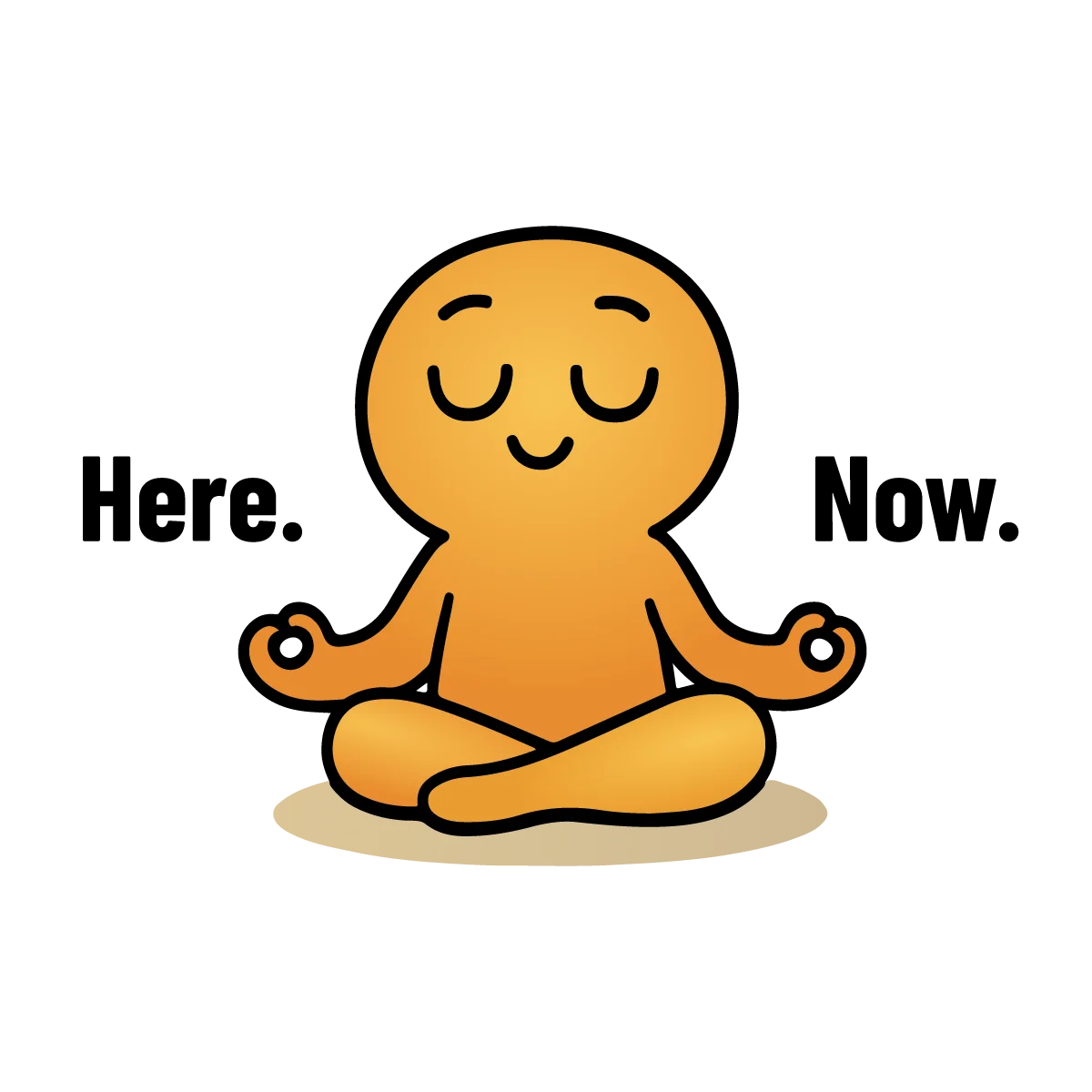
The Here and Now Breath is a quick way to steady yourself when you feel overwhelmed. It involves matching simple words with your breath to anchor your focus. By repeating 'Here' as you breathe in and 'Now' as you breathe out, you give your mind a clear job to do, helping you feel more grounded and present in your body.
How Your Brain Works
Your brain uses two main parts to manage your feelings and your ability to think clearly.
The Guard Dog
The alarm system. Reacts to stress with fight-or-flight responses.
The Wise Owl
Logic and calm decision-making, best accessed when the alarm quiets down.
The Guard Dog Takes Over
When you feel stressed or worried, your Guard Dog (the amygdala) starts barking. It thinks there is a threat, so it sends signals to your body to speed up your heart and breathing. This makes it hard to think clearly because the Guard Dog is drowning everything else out with its alarm.
Using the Body's Brake Pedal
By slowing down your breath on purpose, you send a signal back to your brain that you are safe. This activates the body's brake pedal, which helps quiet the nervous system. The Here and Now Breath specifically helps lower the Guard Dog's volume so it stops reacting to things that aren't actual emergencies.
The Wise Owl Returns
As the Guard Dog settles down, your Wise Owl (the prefrontal cortex) can take charge again. This part of your brain helps you make good decisions and stay focused. Using the words 'Here' and 'Now' acts like a gym workout for your Wise Owl, making it stronger and better at keeping you focused on what matters right now rather than worrying about the past or the future.
How to Use This Skill
Think of this skill as a way to reset your internal volume knob when things get too loud or stressful.
Inhale and Think 'Here'
Take a slow, deep breath in through your nose and quietly say the word 'Here' in your mind, focusing on how the air feels.
Exhale and Think 'Now'
Let your breath out slowly through your mouth while thinking the word 'Now' to release any tension you are holding in your body.
Repeat for One Minute
Keep the rhythm going for about a minute, just noticing the air moving and the two simple words in your mind as you relax.
Real-Life Example
Managing Classroom Stress
The Grade Drop
You get a lower grade than expected on a test and start feeling your heart race as you worry about your future goals.
The Guard Dog's Warning
The Guard Dog starts barking things like, 'You are going to fail the whole class and everyone will be disappointed in you.'
- Pause: Instead of letting the worry spiral, you stop what you are doing.
- Inhale: You take a deep breath in and think 'Here', noticing the air filling your chest.
- Exhale: You breathe out slowly and think 'Now', letting your shoulders drop away from your ears.
- Repeat: You do this for a full minute, keeping your focus only on the words and the rhythm of your breath.
The Guard Dog stops barking and your Wise Owl steps in, helping you realize that one grade is just one moment and you can make a plan to study better.
Practice Tips
To get the most out of this technique, try these simple adjustments to your daily routine.
- Soft Eyes
Closing your eyes or looking at a single spot on the floor helps your Wise Owl focus by blocking out distractions.
- The Long Out-Breath
Try to make your 'Now' breath slightly longer than your 'Here' breath to boost the calming effect on your heart.
- Daily Practice
Practise when you are already calm so your brain knows exactly what to do when things actually get stressful.
Pro Tip
Why It Works
This tool is great because it is fast, invisible to others, and works with your body's natural systems to lower stress.
This skill helps because:
- Instant Calm
It uses your breath to trigger your body's calming system, slowing down a racing heart and relaxing your muscles.
- Focus Control
The simple words 'Here' and 'Now' give your Wise Owl a job, which stops your mind from wandering to stressful thoughts.
- Short and Sweet
You only need 60 seconds to see a change in how you feel, making it easy to use during a busy school day.
References
Research-based evidence supporting this skill
- Research shows that slow breathing and mental anchors can change brain activity to promote a sense of peace and better focus.
- Effect of coherent breathing on mental health and wellbeing. (2023). PMC.
- Zaccaro, A., et al. (2018). How Breath-Control Can Change Your Life: A Systematic Review. Frontiers in Human Neuroscience.
- Simhasana. Scientific Findings on Breathwork.
- Balban, M. Y., et al. (2023). Brief structured respiration practices enhance mood and reduce anxiety. Cell Reports Medicine.
- American Heart Association. (2023). It's not just inspiration – careful breathing can help your health.
- Positive Psychology. 7 Best Breathwork Techniques & Exercises to Use.