If/Then Plan
Key ideas
Skill summary
Three quick reminders before you start.
Overview
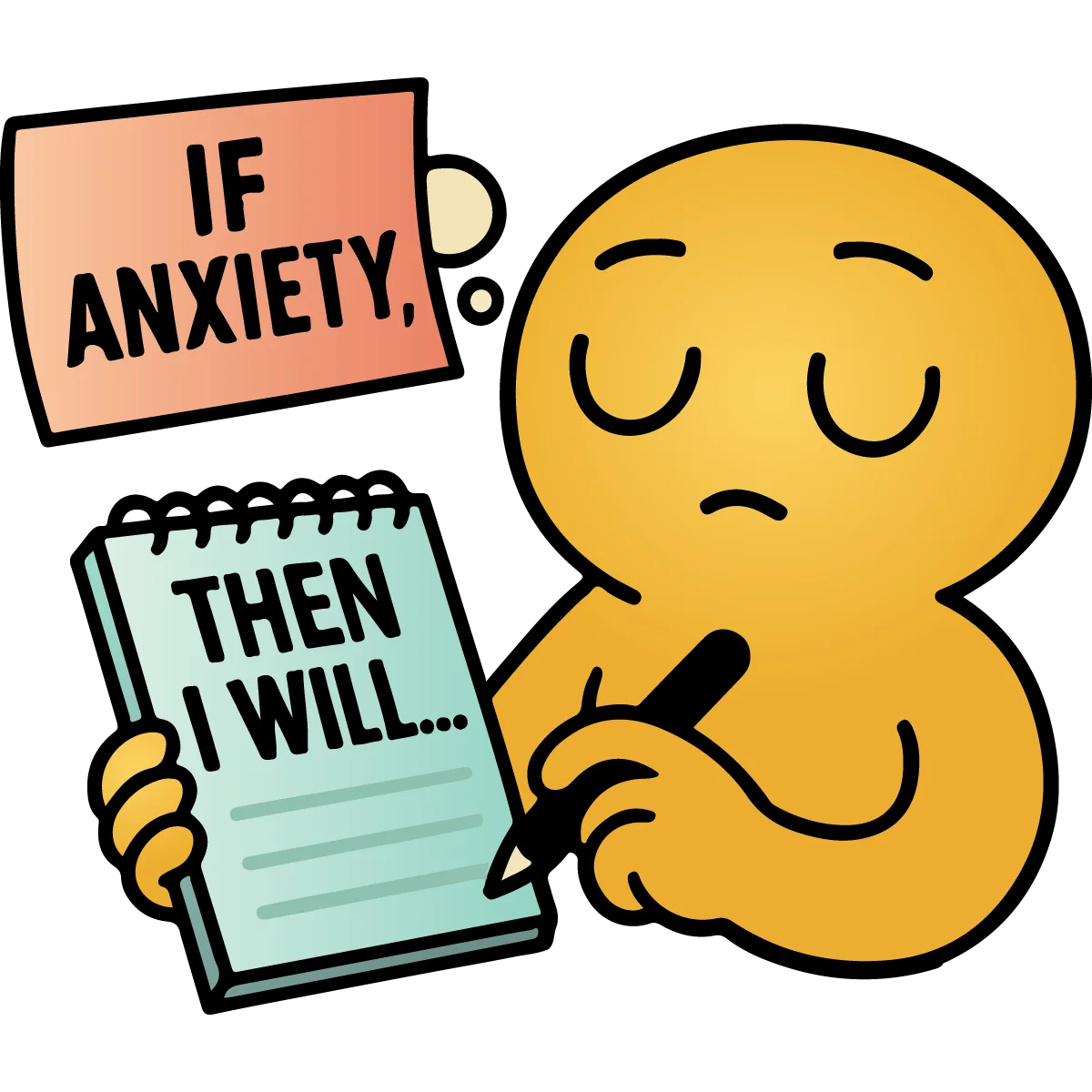
If/Then planning is a simple strategy that helps you take charge when things get stressful. It works by connecting a specific situation to a helpful action. Instead of getting caught in a loop of worry, you decide ahead of time exactly what you will do. This approach builds a bridge between your goals and your behaviour, making it easier to stay calm.
How Your Brain Works
Your brain uses two main parts to manage your feelings and your ability to think clearly.
The Guard Dog
The alarm system. Reacts to stress with fight-or-flight responses.
The Wise Owl
Logic and calm decision-making, best accessed when the alarm quiets down.
The Alarm
Deep inside your brain is a part called the amygdala, but we like to call it the Guard Dog. This part of you is always on the lookout for anything that might be a threat. When the Guard Dog thinks there is trouble, like a hard test or a social situation, it starts barking loudly to protect you. This barking is what we feel as stress. It sends signals to your body to speed up your heart and prepare for a fight. While the Guard Dog is just trying to keep you safe, its loud response can sometimes be a bit too much, making it hard to think clearly when you really need to focus.
The Planner
Up in the front of your brain is the prefrontal cortex, also known as the Wise Owl. This is the part of you that makes plans, solves problems, and helps you make good choices. The Wise Owl is great at seeing the big picture and keeping things logical. However, when the Guard Dog is barking at full volume, it can be really hard for the Wise Owl to be heard. The Wise Owl needs a specific set of instructions to follow so it can step in and help out before the Guard Dog takes over the whole house.
The Shift
- Linking Cues: If/Then planning creates a direct line between a situation and an action. This helps the Wise Owl notice triggers early.
- Using the Body's Brake: When the plan is triggered, the Wise Owl executes a specific task, like a breathing exercise. This acts like a brake pedal for your body's stress response.
- Building Habits: Every time you use an If/Then plan, you are making the connection between the trigger and the helpful response stronger. Over time, the Wise Owl gets faster than the Guard Dog, helping you stay in control of your own behaviour even during tough moments.
How to Use This Skill
Think of this like a video game cheat code. You are programming your brain to react a certain way whenever a specific event happens, so you do not have to pause and think during the action.
Spot the "If" Trigger
"If I notice my heart racing before a test." This helps you catch the feeling right at the start.
Pick the "Then" Action
"Then I will take three slow breaths." This gives your Wise Owl a clear job to do immediately.
Practice the Plan
Spend a minute imagining the trigger and then your response. This makes the Wise Owl faster than the Guard Dog.
Real-Life Example
Handling the Big Presentation
The Spark
Standing up in front of the class and feeling your hands start to shake.
The Guard Dog Bark
"I am going to forget everything and everyone will laugh at me."
- Spot it: Notice the shaky hands as the signal.
- The Plan: Say to yourself, "If my hands shake, then I will grip my notes and take one deep breath."
- The Action: As you stand up, you follow the plan exactly.
- Repeat: The next time you present, your brain remembers the plan.
By using the plan, the Wise Owl calmed the Guard Dog, allowing the student to focus and finish the talk successfully.
Practice Tips
You can make these plans a part of your daily routine to help build your confidence and stay calm.
- Write them down
Keep 3 to 5 plans in a notebook or on your phone to help your brain remember the cues.
- Set a Worry Timer
Spend 15 minutes a day making plans for your worries, then go about your day.
- Celebrate Wins
Track when a plan works to give your brain a reward, making it easier to use the skill again.
Pro Tip
Why It Works
This skill gives you a clear roadmap to follow when things feel uncertain or stressful.
This skill helps because:
- Habit Building
It turns helpful actions into habits so you do not have to struggle to decide what to do.
- Staying in Control
It helps you feel more capable by turning a scary situation into a manageable task with a clear step.
- Calming the Body
It uses simple actions like breathing to slow down your heart and help you think clearly.
References
Research-based evidence supporting this skill
- Research shows that linking specific triggers to planned responses helps people follow through on their goals and manage stress effectively.
- Lawson Psychology. (n.d.). If-then planning: How to boost your chances of successfully reaching your goals.
- YouTube. (2020). ANXIETY HACK | Using 'If… then…' to reduce worry.
- ReachLink. (n.d.). 7 Evidence-Based Techniques to Manage Anxiety Effectively.
- Yung Sidekick. (n.d.). 'Reduce Anxiety': How I Co-Create Treatment Goals That Transform a Client's Relationship with Fear.
- PMC. (2019). An Acceptance-Based Behavioral Therapy for Individuals with Generalized Anxiety Disorder.
- The Sprint Project. (n.d.). Interactive if/then tool for behaviour change.
- Palo Alto University. (n.d.). Anxiety Management Techniques: Translating Research into Practice.
- Algonquin College. (2017). ANXIETY MANAGEMENT PACKAGE.
- U.S. Department of Veterans Affairs. (n.d.). Acceptance and Commitment Therapy Strategies Guide.