Mix It Up (Interleave)
Key ideas
Skill summary
Three quick reminders before you start.
Overview
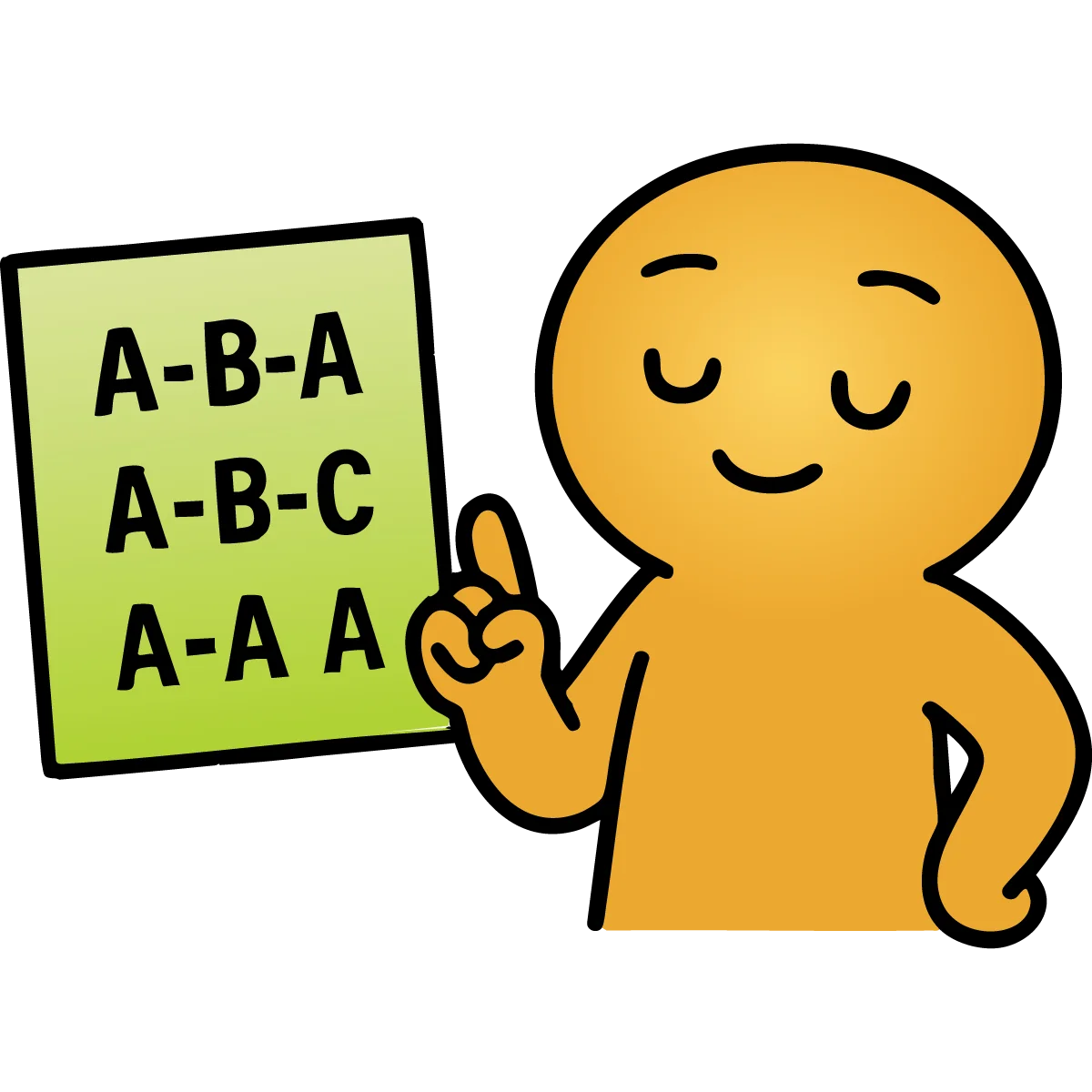
Interleaving is a strategy where you rotate between different but related topics during a single study session. Instead of focusing on one thing for hours, you mix things up to help your brain tell the difference between similar ideas. It makes learning feel a bit tougher at first, but it helps the information stick in your mind for much longer.
How Your Brain Works
Your brain uses two main parts to manage your feelings and your ability to think clearly.
The Guard Dog
The alarm system. Reacts to stress with fight-or-flight responses.
The Wise Owl
Logic and calm decision-making, best accessed when the alarm quiets down.
The Alert System
When you do the same thing over and over, your Guard Dog (Amygdala) gets bored and zones out. This autopilot mode makes it very easy to miss important details or make silly mistakes. By switching topics every ten or fifteen minutes, you keep the Guard Dog alert and engaged. It treats the change as a new situation to monitor, which keeps your focus sharp and prevents you from feeling bored.
The Wise Decision Maker
The Wise Owl (Prefrontal Cortex) is the part of your brain that handles complex choices and critical thinking. When you mix up your practice, the Wise Owl has to work much harder to figure out which strategy to use for each new problem. Instead of just repeating a pattern, it has to actively choose the right tool for the job. This helps you build flexible thinking skills.
Building Stronger Connections
This challenge creates a desirable difficulty that actually helps you learn better. The Guard Dog stays focused because of the constant changes, while the Wise Owl builds flexible maps in your head. This process strengthens the neural pathways between different ideas, making it easier to remember everything when you really need it, like during a big test or a real-life challenge. Mixing it up ensures you aren't just memorizing, but actually understanding the material in a way that lasts.
How to Use This Skill
Think of your brain like a gym. If you only lift the same weight, you stop getting stronger. Interleaving is like a circuit workout for your Wise Owl.
Pick Your Topics
Spend 10 minutes on math fractions. Your goal is to get comfortable with the first set of rules before your brain starts to zone out.
Make the Switch
Move to 10 minutes of word problems. Try to notice how these problems use fractions in a different way than the pure math problems you just finished.
Rotate Again
Switch to 10 minutes of graphing. Look at how the numbers from the first two steps show up on a chart and compare them to the written problems.
Real-Life Example
Beating the Exam Blur
The Mixed-Up Test
You sit down for a math exam and realize the questions are all mixed together from different chapters.
The Guard Dog Panic
I can't do this. All these different chapters are blending together and I am going to freeze up!
- You decide to study by mixing things up instead of focusing on one chapter at a time.
- You spend 10 minutes on fractions, then jump to word problems, then to graphs.
- Every time you switch, you ask your Wise Owl, 'How is this different from the last one?'
- You repeat this cycle three times to keep your brain sharp.
- On exam day, the mixed questions feel totally normal because you practised that way.
The Wise Owl feels prepared for the mix of the exam, which keeps the Guard Dog calm and confident while you work through the questions.
Practice Tips
- Here are a few ways to start mixing it up in your daily routine to help your brain stay sharp
- Shuffle the Deck
Mix problems from your current homework with ones from last week to keep your Wise Owl practised at picking the right solution.
- Self-Quiz
After you switch topics, give yourself a quick one-question quiz to see if the Wise Owl can retrieve the information quickly.
- Spot the Difference
Explicitly say out loud how the new topic is different from the one you just finished to build better mental maps.
Pro Tip
Why It Works
It helps you handle the unexpected and keeps your brain from getting bored or stuck on autopilot.
This skill can be helpful because:
- Clearer Thinking
It helps your brain tell the difference between similar ideas so you do not get confused during a test.
- Stronger Memory
Information sticks around longer because you are building better pathways in your mind through active switching.
- Real-World Ready
Life doesn't come in neat blocks, so practising with a mix prepares you for actual challenges you will face.
References
Research-based evidence supporting this skill
- This technique is based on cognitive psychology research which shows that mixed practice leads to better long-term retention and improved problem-solving compared to studying one thing at a time.
- Kid Med. (n.d.). Becoming an academic MVP: Why mixing it up is better than mastering one thing at a time.
- Agarwal, P. K. (n.d.). Like a tie-dyed shirt: Mix it up with interleaving and boost learning.
- Association for Psychological Science. (2022). Mix it up: Testing students on unrelated concepts can help jump-start learning.
- Sung, J. (n.d.). Cognitive science of learning: Interleaving (mixed practice).
- UC San Diego Psychology. (n.d.). Interleaving: Mixing it up boosts learning [Video]. YouTube.
- University of Iowa. (2022). Mix it up: The benefits of interleaved practice.
- Young, A. F. (n.d.). Interleaving: Boost learning by mixing your studying.
- University of Arizona. (n.d.). L2L strategy - Interleaving - Academic Affairs.