Name the Monster
Key ideas
Skill summary
Three quick reminders before you start.
Overview
Ever feel like your worries are taking over who you are? This technique helps you step back and see anxiety as something outside of yourself. By giving your fear a silly identity, you can start to notice it without letting it run the show. It is a way to change how you relate to stress so it feels less like a part of you and more like a pesky visitor.
How Your Brain Works
Your brain uses two main parts to manage your feelings and your ability to think clearly.
The Guard Dog
The alarm system. Reacts to stress with fight-or-flight responses.
The Wise Owl
Logic and calm decision-making, best accessed when the alarm quiets down.
The Alarm System
- Inside your brain, you have a Guard Dog (the Amygdala) that is always on the lookout for trouble.
- When it thinks you are in danger, the Guard Dog starts barking, which triggers your body's stress response.
- This can make your heart race or your stomach feel tight as the Dog tries to protect you.
- The Guard Dog cannot always tell the difference between a real threat and a stressful situation like a school test.
The Wise Owl Steps In
- When you name your anxiety, you are calling for your Wise Owl (the Prefrontal Cortex).
- The Wise Owl is the part of your brain that handles logic, planning, and staying calm.
- By giving the worry a silly name, the Wise Owl can look at the Guard Dog's barking and say, "Wait, that is just Wobbly Walt being loud again."
- This helps the Wise Owl take control of the situation and quiet the alarm system.
Creating Distance
- This process helps you realize that while you are feeling anxious, you are not the anxiety itself.
- This space allows you to choose how to react instead of just following the Guard Dog's lead.
- It strengthens the connection between the Owl and the Dog, making it easier to stay balanced over time.
How to Use This Skill
Imagine your anxiety is just a clumsy cartoon character trying to get your attention. Here is how you can handle it:
Give your anxiety a silly or funny name
You might call your worry Captain Clumsy or Sir Panic-a-Lot. The goal is to make it feel less like a threat and more like a goofy joke.
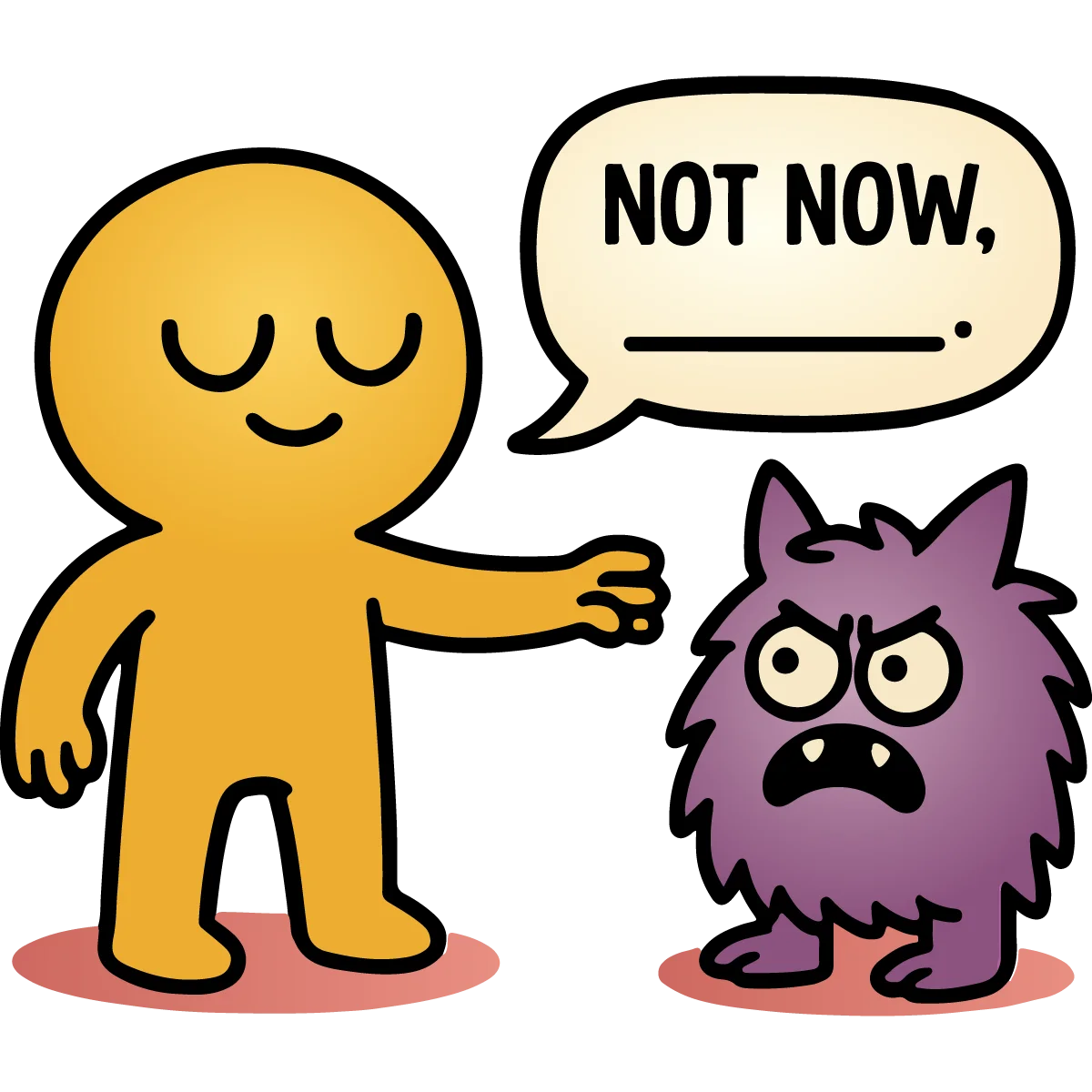
Say: "Not now, [name]"
When you feel the worry, say, "Not now, Captain Clumsy." This reminds your brain that you are the one in charge, not the monster.
Keep it going with practice
Try naming your monster every time you feel a bit of stress, even for small things, so you are ready for the bigger challenges.
Real-Life Example
Alex and Wobbly Walt
The Big Presentation
Alex is about to give a speech in class. Their heart is racing and they feel like they might forget everything they planned to say.
The Guard Dog Thought
I am going to freeze up and everyone in the room is going to laugh at me.
The Step-by-Step Breakdown
- Alex notices the Guard Dog is barking and realizes it is just an anxious feeling.
- Alex decides to name the worry Wobbly Walt to make it feel less scary.
- Alex pictures Wobbly Walt as a clumsy, brightly coloured cartoon character with big shoes.
- Alex says, Not now, Wobbly Walt, under their breath to quiet the alarm.
- The Wise Owl takes over, helping Alex focus on the first few words of the speech.
Alex delivers the talk. The Guard Dog settles down as the Wise Owl stays in control, and Alex feels more prepared for the next time they have to speak.
Practice Tips
- Try these extra steps to help your Wise Owl stay in the lead during stressful moments
- Deep Breathing
Combine the naming trick with slow breaths to help your body's brake pedal work even faster to calm the Guard Dog.
- Doodle the Monster
Draw what your monster looks like. Making it look goofy can help make the fear feel smaller and much less powerful.
- Keep a Success Log
Write down times you successfully named the monster. This helps your brain learn that you have the power to handle tough moments.
Pro Tip
Why It Works
This skill is a great way to build resilience and help you feel more in control of your emotions during stressful times.
This skill helps because:
- Creates Space
It helps you realize that your thoughts are just things you are noticing, not necessarily facts about who you are.
- Calms the Alarm
It signals to your brain's internal alarm that you are actually safe and do not need to run away.
- Builds Confidence
Each time you do this, you show yourself that you can face scary things without letting them stop you from doing your best.
References
Research-based evidence supporting this skill
- This technique is based on modern cognitive and acceptance practices that focus on observing thoughts without judgment to improve emotional health.
- Contextual Consulting. (2023). Conquering the anxiety monster (with love) metaphor.
- Anxiety Sisters. (2023). Anxiety Management Technique: Naming Your Monsters.
- MGH Clay Center. (2023). How to Understand Your Child's "Anxiety Monster".
- University at Buffalo. (2024). 'The Worry Monster' aims to help kids handle anxiety.
- ParentMap. (2023). The Anxiety Monster: Wrangling Strategies to Help Kids Feel Less Worried.
- YouTube. (2023). How To Tame My Anxiety Monster.
- ADAA. (2023). Moving Against the OCD Worry Monster.
- Glow Blogs. (2020). Worry Monster Toolkit.
- SMARTS. (2023). Calm the Anxiety Monster!
- Psychology Today. (2013). Simple Steps For Families To Conquer The Worry Monster.