One Ask
Key ideas
Skill summary
Three quick reminders before you start.
Overview
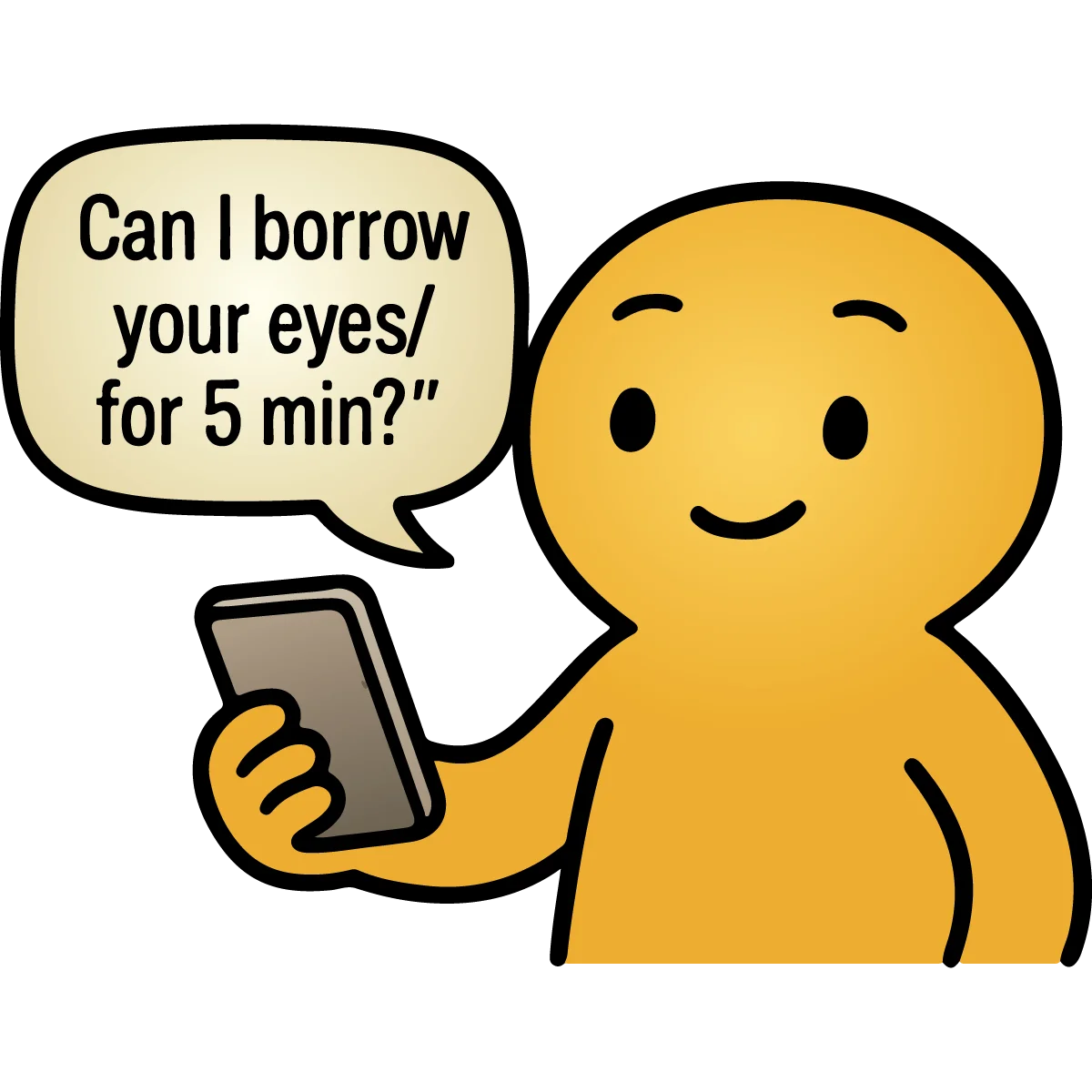
When you feel overwhelmed, it is easy to pull away from people, but that usually makes things harder. The One Ask is a simple strategy to get back on track by asking one person for just five minutes of help. Instead of venting for hours, you focus on one specific thing you are stuck on. This helps you reconnect with your friends or family without feeling like you are asking for too much or bringing them down with you.
How Your Brain Works
Your brain uses two main parts to manage your feelings and your ability to think clearly.
The Guard Dog
The alarm system. Reacts to stress with fight-or-flight responses.
The Wise Owl
Logic and calm decision-making, best accessed when the alarm quiets down.
The Alarm System
When you are stressed or feeling stuck, your brain's Guard Dog (the amygdala) starts barking. This is your body's way of protecting you from danger, but it can make it hard to think clearly. It floods your system with stress chemicals that make you want to run away or hide.
The Shift to Connection
Reaching out to a friend with a small request acts like a signal to the Guard Dog that you are safe. When you connect with someone you trust, your brain releases a chemical called oxytocin. This natural "bonding chemical" helps quiet the Guard Dog's barking and lowers your fear levels.
Bringing the Owl Back
Once the Guard Dog is calm, your Wise Owl (the prefrontal cortex) can take over again. This part of your brain handles logic and planning. By asking for just five minutes of help, you give your Wise Owl a clear, manageable task, which makes it much easier to find a solution and start feeling better. This process moves you from a state of panic into a state of problem-solving.
How to Use This Skill
Using this skill is like calling a teammate for a quick assist when the game gets too intense. It keeps you from getting overwhelmed by the whole problem.
Spot when you are stuck
Realize you have been staring at the same page for twenty minutes and feel a knot in your stomach, then label it as being stuck.
Pick a trusted person
Choose a friend or family member who usually listens well and send them a quick text message to start the connection.
Send the five-minute message
Message them: "Hey, I am stuck on this math problem. Could you help me for five minutes?" This keeps the commitment low for everyone.
Take in the support
Listen to their suggestion, try it out, and notice if your stress levels start to drop as you find a way forward.
Real-Life Example
The Math Test Panic
The Stress Signal
You get a bad grade back on a math test and feel like your whole world is crashing down.
The Guard Dog's Bark
"I am going to fail this class, I am not smart enough, and there is no point in even trying anymore."
The Breakdown
- Notice the panic: You stop and realize your Guard Dog is barking loud and you are feeling stuck.
- Choose a friend: You decide to text your friend Sam, who is pretty good at math.
- Send the message: You type, "Hey, I am stuck on this math test result. Could you help me look at just one problem for five minutes?"
- Get the assist: Sam calls and shows you a shortcut for that one specific type of question.
- Moving forward: You realize you understand that one part now, which helps you feel ready to talk to the teacher later.
The Guard Dog stops barking because you are not alone, allowing the Wise Owl to see a clear path forward.
Practice Tips
Try these small steps to make reaching out feel more natural and effective whenever you feel overwhelmed.
- Be Specific
Think of exactly what you are stuck on before you ask, so the other person knows how to help you quickly.
- Say Thank You
A quick thanks helps build a stronger bond and makes it more likely they will help next time you ask.
- Keep Trying
If the first person is busy, try asking someone else. It is okay to reach out to a backup person the same day.
Pro Tip
Why It Works
It is a low-pressure way to get support without feeling like a burden to others.
This skill helps because:
- Lowers the stakes
Asking for just five minutes makes it easy for others to help and for you to ask without feeling guilty.
- Calms the brain
Social connection releases calming chemicals that help you feel safe and supported during tough times.
- Builds focus
It forces you to pick one specific problem instead of worrying about every single thing at once.
References
Research-based evidence supporting this skill
- This strategy is based on single-session support models that focus on small, actionable steps to improve mental well-being through social connection.
- LightHeart Associates. (n.d.). How does one on one therapy work?
- NAMI. (n.d.). Psychotherapy.
- Psychology Today. (2019, July). One-session counseling.
- Reach Behavioral Health. (n.d.). The benefits of one-on-one therapy.
- Reynolds Psych. (n.d.). What is individual psychotherapy and how one-on-one therapy helps.
- South Jersey Coping Clinic. (n.d.). The impact of one-on-one sessions in mental wellness.
- Stone Oak Counselors. (n.d.). One time therapy session: Quick mental health boost!
- The Ross Center. (n.d.). What is a single session consultation? A flexible approach to mental health.