Plan B Sketch
Key ideas
Skill summary
Three quick reminders before you start.
Overview
A Plan B Sketch is a simple tool to help you manage worries before they get too big. It involves creating a specific if-then plan for a situation that makes you nervous. By deciding ahead of time how you will handle a challenge, you can feel more prepared and less overwhelmed by what if thoughts.
How Your Brain Works
Your brain uses two main parts to manage your feelings and your ability to think clearly.
The Guard Dog
The alarm system. Reacts to stress with fight-or-flight responses.
The Wise Owl
Logic and calm decision-making, best accessed when the alarm quiets down.
The Guard Dog Spots Trouble
The Guard Dog lives in the centre of your brain. Its only job is to watch for danger. When you start worrying about what might go wrong, the Guard Dog starts barking. It floods your body with stress, making your heart rate go up and your thoughts spin. This is what we call catastrophic thinking, where one small mistake feels like the end of the world.
The Wise Owl Steps In
The Wise Owl lives in the front of your brain. It is the part of you that thinks logically and makes plans. When the Guard Dog is barking, the Wise Owl can help calm things down by focusing on facts. By writing a Plan B Sketch, you are giving the Wise Owl a specific tool to use so it can take charge of the situation.
Strengthening the Connection
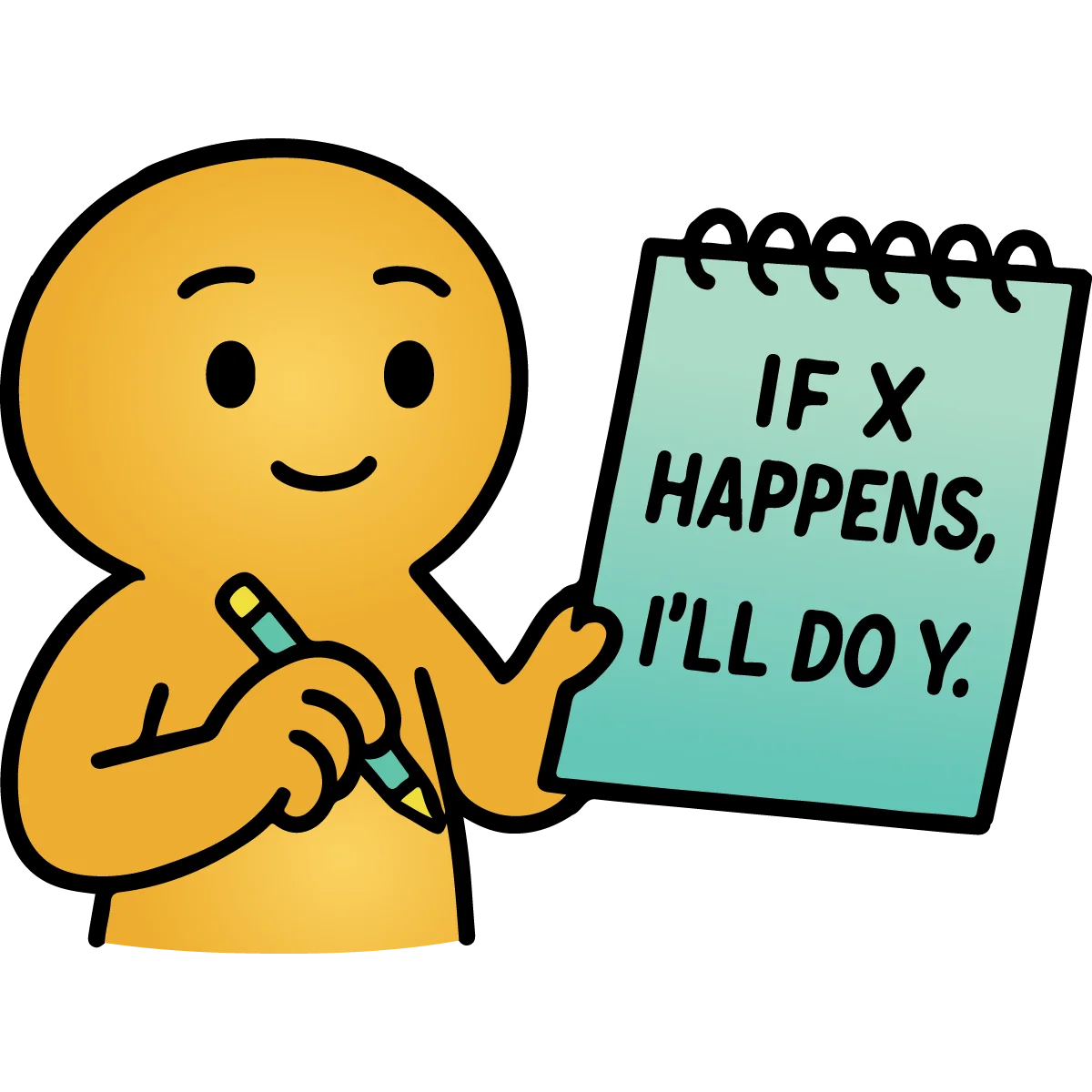
Every time you practice an "If X happens, then I will do Y" plan, you are building a stronger path between the Owl and the Dog. This helps the Wise Owl take charge faster, stopping the Guard Dog from taking over. It turns a scary worry into a manageable plan that makes you feel more in control of your day.
How to Use This Skill
Think of this skill as a fire drill for your mind, it helps you know exactly what to do before the smoke starts to rise.
Identify the worry (X)
Identifying that you are worried about forgetting your lines during a school presentation.
Write a brief, specific action (Y)
Deciding that if you forget a line, you will take a breath and look at your notes.
Keep it brief
Writing your plan in just a few words so it is easy to remember under pressure.
Real-Life Example
Practice Makes Progress
The Stressor
Standing in front of the class for a big talk while feeling very nervous.
The Guard Dog's Bark
If I mess up my words, everyone will laugh and I will fail the whole programme.
The Plan in Action
- Notice the worry: Acknowledge that you are nervous about the presentation. 2. Define the 'If': Identify the specific trigger, like forgetting your words. 3. Define the 'Then': Choose a simple action, like taking a breath and checking notes. 4. Commit to it: Writing this down helps your brain create a shortcut so you do not have to think twice when the moment arrives.
The Wise Owl calms the Guard Dog by using the plan, allowing for a smooth recovery and building confidence.
Practice Tips
Try these ideas to help make this skill a regular part of your routine.
- Use Visual Cues
Put your plan somewhere you can see it, like a phone reminder, to keep the Wise Owl engaged.
- Weekly Review
Check in on your plans once a week to see if they need changing as you get more confident.
- Journal Your Wins
Keep track of when your Plan B worked to show your brain that you can handle tough moments.
Pro Tip
Why It Works
It gives you a clear roadmap to follow so you do not feel stuck when worries pop up.
This skill helps because:
- Confidence Boost
It helps you feel more capable of handling unexpected moments because you already have a backup.
- Stops Scary Thoughts
It interrupts the loop of thinking about the worst-case scenario by giving you a solution.
- Builds Better Habits
It trains your brain to look for helpful actions instead of just feeling stuck in the fear.
References
Research-based evidence supporting this skill
- Research shows that using if-then planning helps automate helpful behaviours and reduces the impact of stressful thoughts on your daily life.
- Vrinten, J., et al. (2021). Using the Intervention Mapping Approach to Develop a Mental Health Intervention. Frontiers in Psychology, 12, 648678.
- Smith, A., et al. (2022). Explaining adults' mental health help-seeking through the lens of theory. NIH.
- Cambridge. (2023). Creating a hierarchy of mental health stigma. BJPsych Open.
- Qualitative Methods in Mental Health Services Research. PMC.
- Lilienfeld, S. O. (2000). The Scientific Status of Projective Techniques. Psychological Science in the Public Interest.
- Psychology Today. (2016). Does Having a Plan B Sabotage Your Plan A?
- University Digital Conservancy. (n.d.). Final Plan B Paper.
- UK Biobank Study. (2024). PLOS Mental Health.