Spaced Reps
Key ideas
Skill summary
Three quick reminders before you start.
Overview
Spaced Reps is a study method where you review what you have learned at specific intervals instead of all at once. This approach helps your brain hold onto information much longer by giving it time to process. By spacing out your reviews, you can make learning feel less stressful and more effective over time.
How Your Brain Works
Your brain uses two main parts to manage your feelings and your ability to think clearly.
The Guard Dog
The alarm system. Reacts to stress with fight-or-flight responses.
The Wise Owl
Logic and calm decision-making, best accessed when the alarm quiets down.
The Stress of Cramming
When you try to jam all your studying into one night, your Guard Dog, which is the Amygdala, gets very worried. This part of your brain handles stress and can make you feel overwhelmed or tired. If the Guard Dog is barking too much, it blocks your ability to learn new things. This is why cramming often leads to forgetting everything right after the test is over.
The Wise Owl Takes Over
By using Spaced Reps, you give your Wise Owl, known as the Prefrontal Cortex, the time it needs to work properly. The Owl is the part of your brain that thinks clearly and builds strong, lasting connections between different ideas. Instead of being exhausted by a single long session, the Wise Owl can carefully store information in your long-term memory while you rest.
Building Stronger Paths
- Every time you revisit a topic after a break, the Wise Owl strengthens the pathways in your brain's memory centre.
- Taking breaks allows your brain to grow new cells that help memories stick for a long time.
- Spacing out your work keeps your mental energy fresh and prevents the Guard Dog from taking over.
How to Use This Skill
Think of learning like building a brick wall. If you try to stack all the bricks at once without letting the mortar dry, the wall will crumble. Spacing your reps is like letting the mortar set so the wall stays strong.
Step 1: The Initial Spark
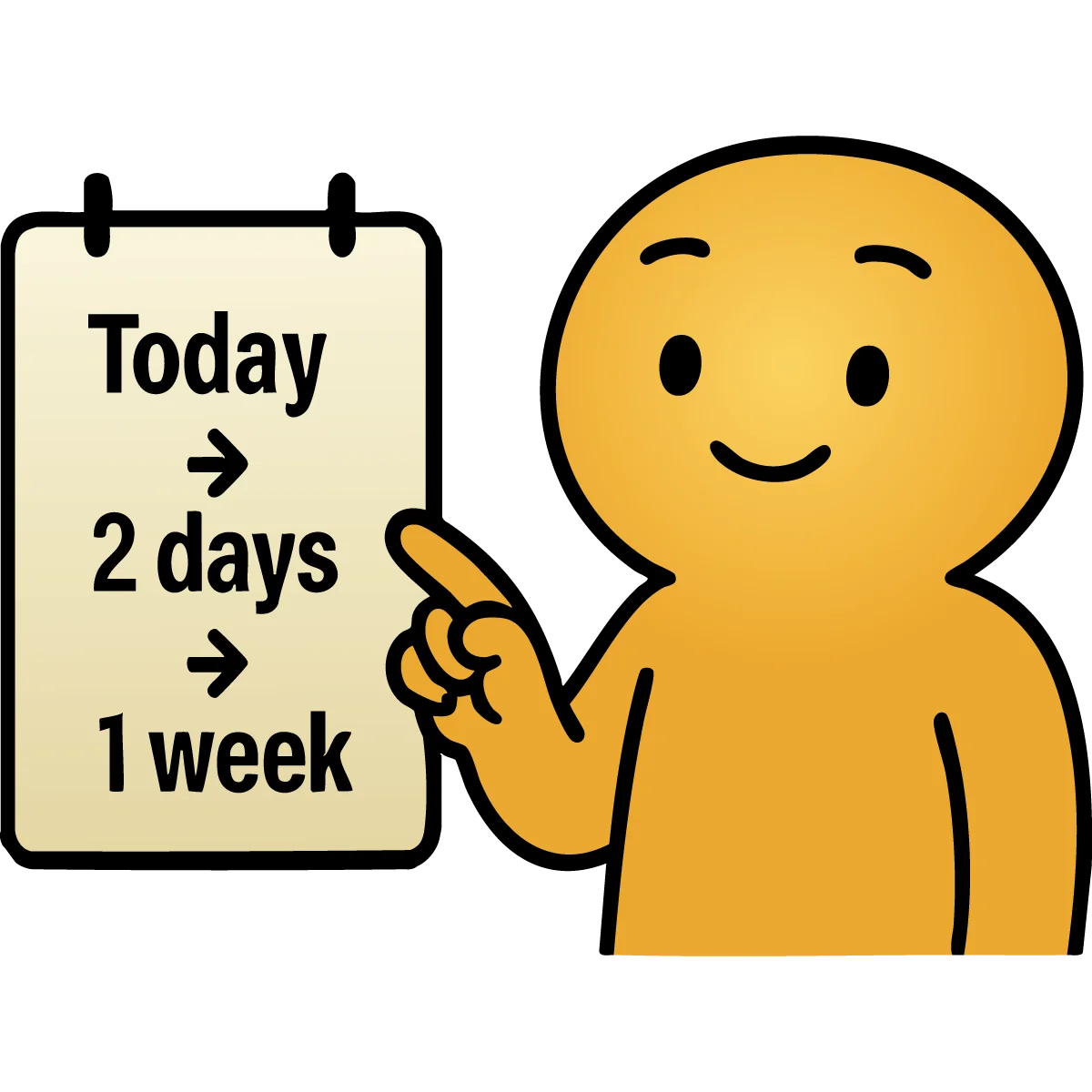
Read your notes or watch a video on the topic today to create a starting point for your memory.
Step 2: Strengthening the Connection
Two days later, quiz yourself using flashcards to see what you remember without looking at your notes.
Step 3: Making it Permanent
One week after your first session, do a practice test to lock the knowledge in for your exam.
Real-Life Example
Acing the History Final
The Big Exam
A student needs to learn the causes of World War Two for a major exam but feels totally overwhelmed by the amount of info.
The Guard Dog Thought
If I do not spend all night tonight memorizing these notes, I am going to forget everything and fail.
The Breakdown
- Initial Review: On Monday, spend 20 minutes looking over your history notes about World War Two.
- First Gap: Wait until Wednesday. Do not look at the notes at all during this time.
- Active Recall: On Wednesday, try to explain the causes of the war out loud or use flashcards without looking at your notes.
- Second Gap: Wait until the following Monday.
- Final Check: Do a quick practice quiz. You will notice you remember way more than if you had crammed.
You retain most of the info for the long term and pass the exam with low stress, as your Wise Owl stayed in charge and your Guard Dog stayed relaxed.
Practice Tips
Here are some simple ways to make Spaced Reps work for you and your schedule.
- Use Flashcard Apps
Consider apps like Anki or Quizlet that use timers to tell you exactly when it is time to review a card.
- Try Active Recall
When reviewing, do not just re-read. Try to remember the info from your own head first to build stronger brain paths.
- Pick Quiet Times
Schedule your reviews for the morning or when you are feeling calm to keep your Guard Dog from getting distracted.
Pro Tip
Why It Works
Spaced Reps is highly recommended because it helps you remember more info with less stress by working with your brain's natural rhythm.
This skill can help because:
- Less Stress
It keeps your Guard Dog calm by avoiding the panic and exhaustion that comes with last-minute studying.
- Stronger Memory
It helps your Wise Owl build permanent connections that last much longer than quick cramming sessions.
- Better Focus
It prevents your brain from getting too tired, which keeps your mental energy levels steady for other activities.
References
Research-based evidence supporting this skill
- Research shows that spacing out your learning is much better for your memory than cramming. Studies prove that it helps grow new brain cells and keeps information fresh over many months.
- SafetyCulture. (2023). What is the evidence around spaced repetition? SC Training.
- Wranx. (2023). The science behind spaced repetition.
- Mignon, A., & Lebrun, C. (2007). Neurogenesis and the spacing effect: Learning over time enhances memory. PubMed Central.
- Kapler, I. V., Weston, T., & Wiseheart, M. (2022). Evidence of the spacing effect and influences on perceptions of learning. PubMed Central.
- The Learning Scientists. (2023). Spaced practice and working memory.
- BrainFacts. (2021). The neuroscience behind the spacing effect.
- ERIC. (2019). Spaced repetition: Towards more effective learning in STEM.