Three Options Map
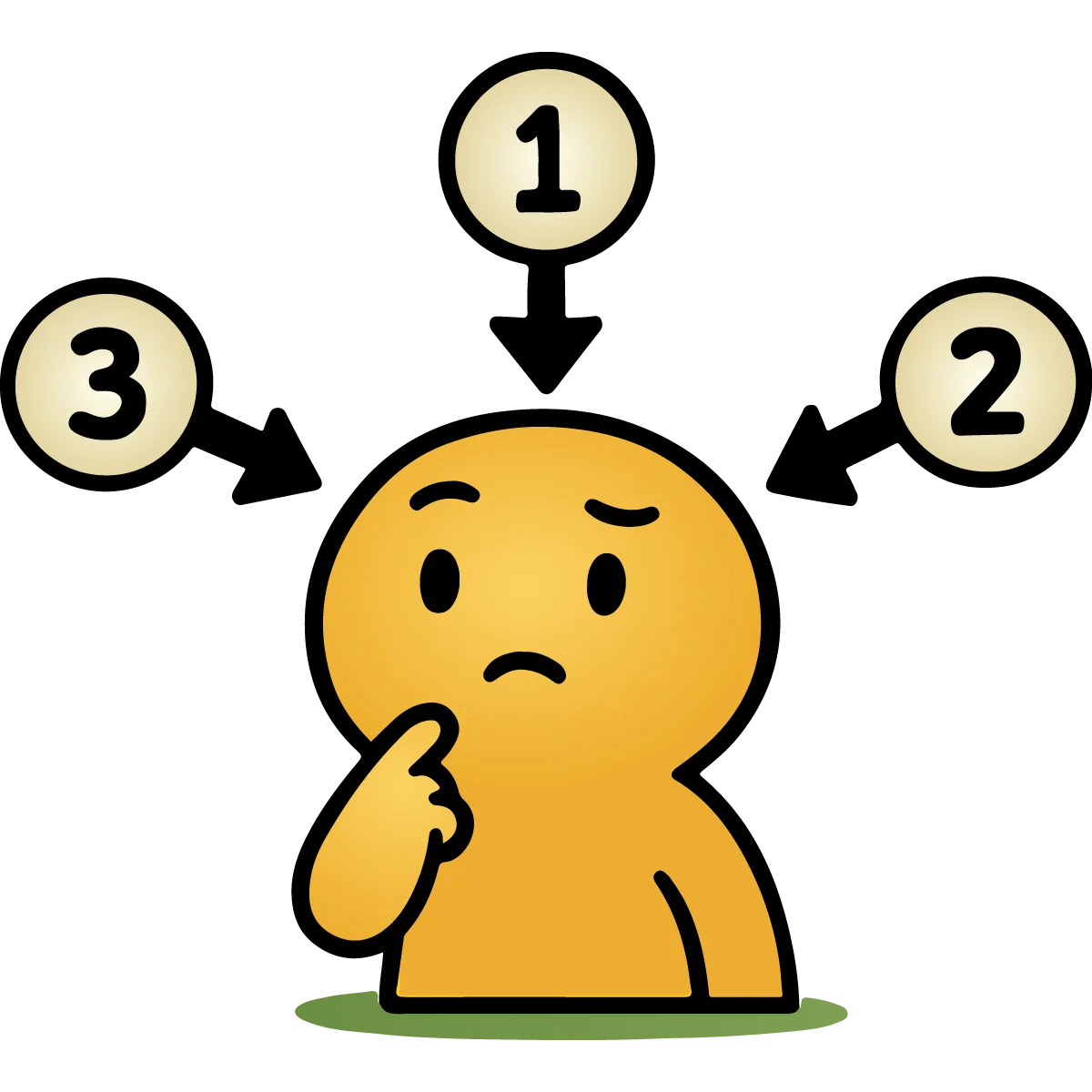
Key ideas
Skill summary
Three quick reminders before you start.
Overview
Ever feel like you are totally stuck and there is no way out? This tool is a simple way to help you find your way forward when things feel heavy. It focuses on finding small, manageable choices to help you feel more in control of your situation without feeling overwhelmed.
How Your Brain Works
Your brain uses two main parts to manage your feelings and your ability to think clearly.
The Guard Dog
The alarm system. Reacts to stress with fight-or-flight responses.
The Wise Owl
Logic and calm decision-making, best accessed when the alarm quiets down.
The Alarm System
When you feel trapped or overwhelmed, your Guard Dog (the amygdala) starts barking. It thinks there is a threat and triggers a freeze response. This narrows your focus so you only see the problem, not the solutions. It floods your system with stress hormones that can make you feel shaky or stuck in a loop of bad thoughts.
The Wise Shift
When you start thinking of three different options, you wake up your Wise Owl (the prefrontal cortex). This part of your brain handles planning and flexible thinking. By looking for choices, you tell the Guard Dog that it is safe to stop barking. This restores your ability to think clearly and logically.
Building Momentum
- Small Wins: When you circle the easiest option, your Wise Owl picks a path that does not require too much energy.
- Dopamine Hit: Achieving a small goal releases a feel-good chemical that helps you feel more confident.
- Lowering Stress: Taking a simple action helps lower the stress hormones in your body, making it easier to keep moving forward.
How to Use This Skill
Think of this like giving your Wise Owl a map to show the Guard Dog that there are many exits out of a sticky situation.
Notice the Stuck Feeling
You might say to yourself, "I feel stuck because this assignment feels too big to finish."
Brainstorm 3 Different Paths
Write down three things you could do, like asking a friend for help, emailing the teacher, or just doing the first page.
Circle the Easiest One
Pick the option that feels like the least amount of work and do it right away.
Real-Life Example
Getting Past a Tough Grade
The Bad News
You get a math test back and the mark is much lower than you expected, making you feel like you failed.
The Guard Dog Bark
"I am never going to pass this class. I am just not good at math and I am totally trapped."
The Way Forward
- Identify the feeling: Notice that you feel stuck and overwhelmed.
- Brainstorm three options:
- Option A: Study for two hours every single night (Hard).
- Option B: Ask the teacher for help after class (Medium).
- Option C: Review notes with a friend for 20 minutes (Easiest).
- Circle the easiest: You pick Option C.
- Take action: Text your friend to set up a quick study session.
By starting with the easiest task, the Wise Owl calms the Guard Dog. You feel more in control and your confidence grows as you take action.
Practice Tips
Try these ideas to make the Three Options Map work even better for you when you feel overwhelmed.
- Take a deep breath
Use slow breathing before you start brainstorming to help your Wise Owl think more clearly.
- Write it down
Use a journal to track what happens after you take action. This helps you see your own progress.
- Stick to three
Only come up with three choices so your brain does not get tired from making too many decisions.
Pro Tip
Why It Works
It is a simple way to build your confidence and learn how to handle stress on your own terms.
This skill helps because:
- Reduces Helplessness
It teaches your brain to look for exits and solutions when you feel trapped by a problem.
- Creates Momentum
Small wins help you feel better and make it much easier to keep going with harder tasks.
- Boosts Control
Feeling like you have a choice can lower your overall stress levels and improve your mood.
References
Research-based evidence supporting this skill
- This technique is based on how our brains solve problems and handle stress, drawing from established wellness and recovery tools used to support mental health.
- Frontiers in Psychology. (2021). Using the intervention mapping approach to develop a mental health program.
- Health Research Board. (2012). Mental health assessment tools.
- Ideas4Kids. (2023). The MAP training program.
- PMC. (2016). MAP training: combining meditation and aerobic exercise reduces depression.
- PMC. (2022). Mapping mad maps and recovery tools developed by mental health service users.
- Positive Psychology. (2023). The positive CBT triangle explained.
- Psychology Today. (2021). The three C method for healthy justifications.
- Sage Journals. (2017). Three approaches to understanding and classifying mental disorder.
- WordPress. (2020). Introducing MAPS for mental health.