Uncomfortable, Not Dangerous
Key ideas
Skill summary
Three quick reminders before you start.
Overview
Ever feel like your heart is racing or your palms are sweaty and you think something bad is about to happen? This skill is all about noticing when you feel bad but are actually safe. It helps you stay calm during stress by using specific words to help your brain recognize that being uncomfortable is just a physical feeling, not a reason to panic. By naming what is happening, you can lower the intensity of the situation.
How Your Brain Works
Your brain uses two main parts to manage your feelings and your ability to think clearly.
The Guard Dog
The alarm system. Reacts to stress with fight-or-flight responses.
The Wise Owl
Logic and calm decision-making, best accessed when the alarm quiets down.
The Alarm
- The Guard Dog (your amygdala) is the brain's alarm system. Its job is to bark loudly whenever it thinks you are in danger.
- When the Guard Dog barks, it floods your body with stress hormones. This is helpful if a bear is chasing you, but not so helpful during a math test.
- Sometimes, the Guard Dog gets confused and treats a normal social challenge like a life-threatening emergency.
The Shift
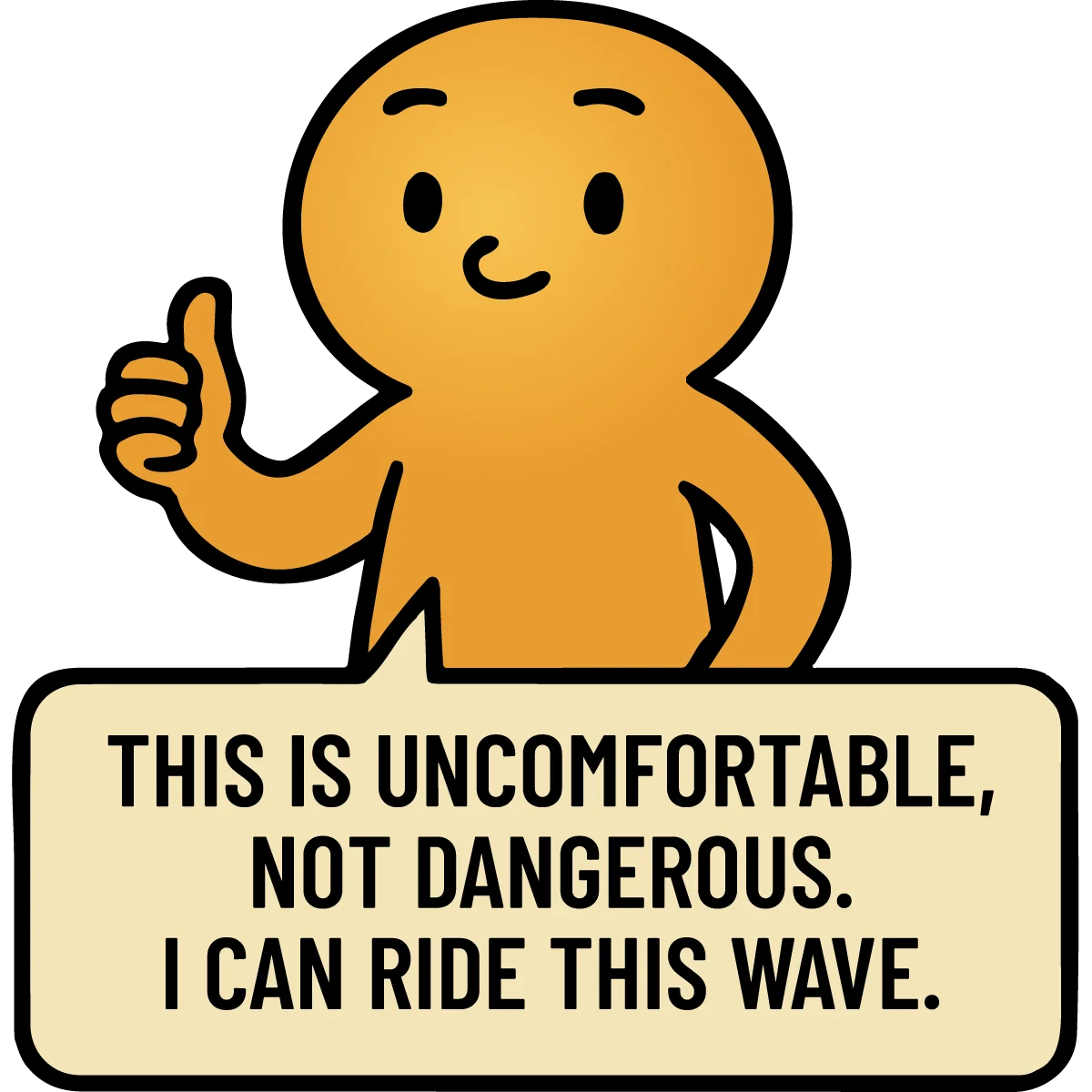
- When you say "This is uncomfortable, not dangerous," you are calling in the Wise Owl (your prefrontal cortex).
- The Wise Owl is the rational part of your brain that can look at the facts and decide if you are really in trouble or just feeling a bit weird.
- The Wise Owl has the power to tell the Guard Dog to settle down because everything is actually okay.
The Connection
- Every time you practice this, the connection between the Wise Owl and the Guard Dog gets stronger.
- This process helps your brain's calming system take over, which acts like a brake pedal for your nervous system.
- Over time, your body learns how to return to a calm state much faster, even when things feel intense.
How to Use This Skill
Think of this skill like a surfboard that helps you stay on top of a big wave instead of getting wiped out by your emotions.
Label the Feeling
Say "I notice I feel uncomfortable." This helps you realize that a racing heart is just a physical signal.
Check the Danger
Tell yourself "This is not dangerous." It reminds the brain that a presentation is not a physical threat.
Ride the Wave
Say "I can ride this wave." This keeps you focused until the intensity starts to drop naturally.
Real-Life Example
Facing the Crowd
The Big Presentation
You have to stand up in front of the whole class to give a speech and your stomach starts to do flips.
The Guard Dog Thought
Everyone is going to laugh at me. This is a total disaster. I am in big trouble.
The Breakdown
- Pause and Breathe: Take a deep breath to start your body's brake pedal.
- Speak the Truth: Say, "This is uncomfortable, but I am not in danger."
- Observe: Notice the sweaty palms without trying to stop them or panic about them.
- Continue: Move forward with the talk while letting the feeling exist in the background.
The Wise Owl takes the lead, the heart rate begins to drop, and the Guard Dog stops barking so loudly.
Practice Tips
- You can make this skill even stronger with these simple habits
- Deep Breathing
Try slow breathing to help your body's calming system work better with your Wise Owl.
- Track the Intensity
Rate your stress from 1 to 10 before and after using the phrase to see how it changes over time.
- Reflect in a Journal
Write down what happened later to help your brain remember that you were actually safe the whole time.
Pro Tip
Why It Works
It helps you handle big emotions without feeling like you are losing control or being in actual danger.
This skill helps because:
- Clears the Fog
It helps the Wise Owl stay in charge so you can think clearly even when you are stressed.
- Calms the Body
It acts like a brake pedal for your nerves, helping your heart rate return to normal.
- Builds Confidence
The more you do it, the more your brain learns that you can handle tough moments without panicking.
References
Research-based evidence supporting this skill
- This technique is based on modern brain science and well-known methods like mindfulness that help people manage stress.
- Reimers, S. (2024). Transcendent Mental Health. Retrieved from
- Mindlift. (2024). Cynical Affirmations: For People Who Are Tired of Pretending They Are Okay. Retrieved from