Worry Parking Lot
Key ideas
Skill summary
Three quick reminders before you start.
Overview
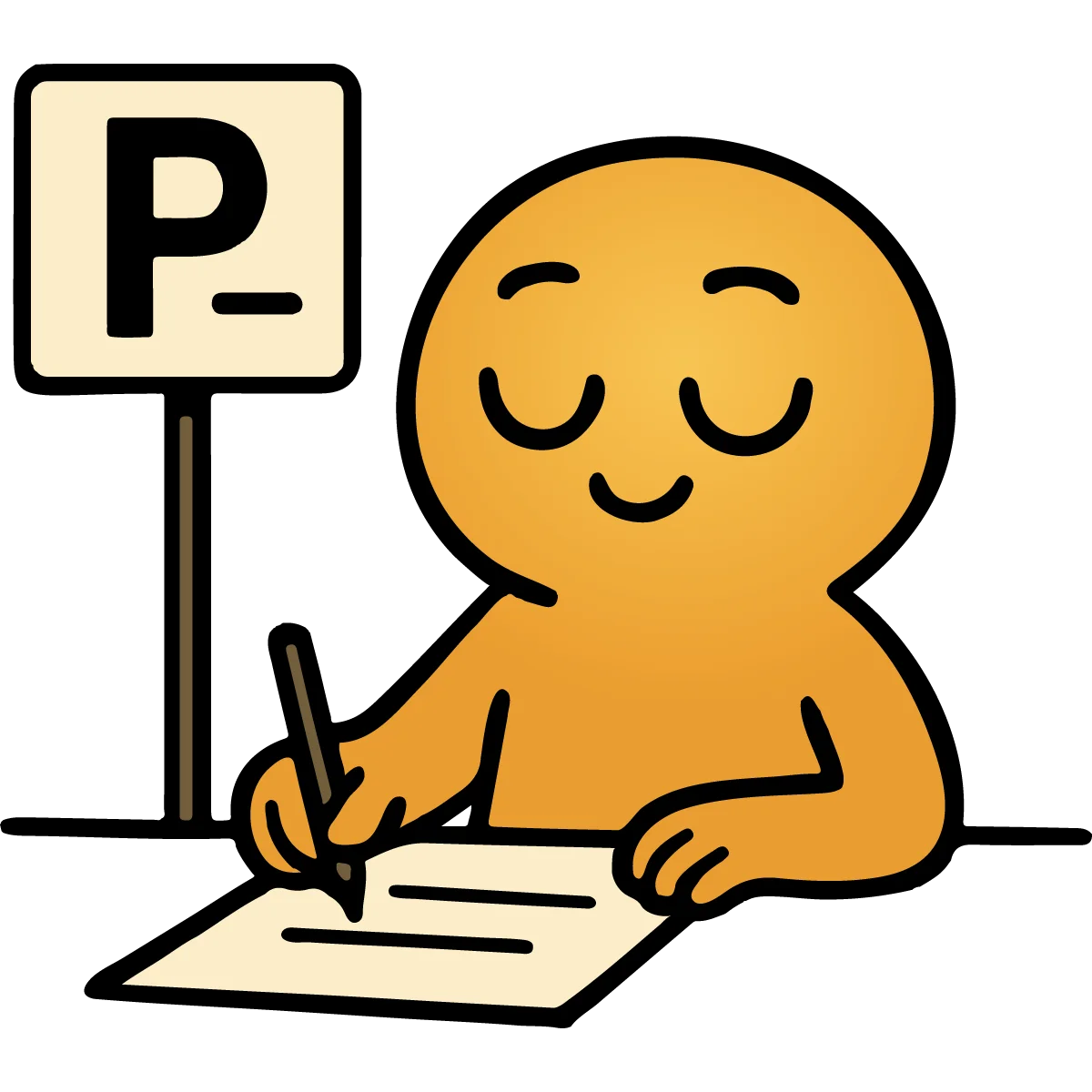
Ever feel like your thoughts are on a loop, making it hard to focus on what you are doing right now? The Worry Parking Lot is a simple tool to help you take a break from those heavy thoughts. It involves noting down what is on your mind and deciding to look at it later.
By setting a specific time to handle these thoughts, you give yourself permission to focus on your day without feeling like you are ignoring your concerns. It is a way to stay in control of your focus while still being kind to your worries.
How Your Brain Works
Your brain uses two main parts to manage your feelings and your ability to think clearly.
The Guard Dog
The alarm system. Reacts to stress with fight-or-flight responses.
The Wise Owl
Logic and calm decision-making, best accessed when the alarm quiets down.
The Guard Dog
The Guard Dog is the part of your brain that looks out for trouble. When it spots something stressful, it starts barking loudly, which we feel as worry. It wants to keep you alert, but sometimes it gets stuck in a loop, flooding your system with stress and making it hard to think about anything else. It is purely reactive and does not listen to logic once it starts its barking cycle.
The Wise Owl
The Wise Owl is the part of your brain that plans and solves problems. It knows that some worries cannot be solved right this second. When you use a Parking Lot, the Wise Owl steps in to create a structure. It tells the Guard Dog, 'I see you, and I have written this down to look at later.' This calms the alarm system because it knows the concern is safe and will be addressed.
The Shift
By 'parking' the worry, you give the Guard Dog a reason to stop barking. Writing it down acts like a ticket that proves the task is not forgotten. This lets the Wise Owl take back control, lowering the stress chemicals in your body and helping you get back to your centre. It uses a natural brain rhythm where unfinished tasks feel urgent until they are scheduled.
How to Use This Skill
Think of your brain like a busy street. When a worry stops traffic, you can move it into a parking spot so the rest of your day can keep moving smoothly.
Write down your worry as a short headline
Write 'Scared about the math test' on a sticky note. This tells your brain the thought is recorded safely and won't be forgotten.
Set a time later today to check your parking lot
Pick a 10 minute window, like 7:00 PM. This lets your mind relax because it knows there is a plan to deal with the stress later.
Shift your focus back to what you were doing
Go back to your homework or hobby. Notice how your body feels a bit lighter now that the worry has its own spot to wait.
Real-Life Example
The Tuesday Afternoon Quiz Stress
The Stress Trigger
Alex is sitting in class on a Tuesday afternoon and sees a low mark on a surprise math quiz.
The Guard Dog Thought
The brain starts looping: 'I am going to fail the whole year and everyone will be disappointed in me.'
The Parking Lot Breakdown
- Alex notices the heavy feeling in their chest and the looping thought.
- Alex opens their phone and writes 'Math quiz results' in a note app.
- Alex sets a reminder for 6:30 PM to think about it for exactly 10 minutes.
- Alex takes three slow breaths and returns their attention to the teacher.
The Wise Owl takes charge by making a plan, which helps the Guard Dog stop barking and allows Alex to finish their school day in peace.
Practice Tips
Try these ideas to make your parking lot work even better for your daily routine.
- Label your worries
During your review, check if a worry is something you can 'do' (take action) or something you 'stew' on (just a feeling).
- Keep it short
Only write one line for the headline. You do not need to write a whole story while you are trying to stay focused.
- Physical Reset
Pair your parking with a quick breathing exercise to help your body feel the shift into a calmer state.
Pro Tip
Why It Works
This technique is a great way to manage daily stress without feeling overwhelmed by every single thought.
This skill can help because:
- Closes the loop
It satisfies the brain's need to finish things, which stops the same thought from popping up over and over.
- Builds focus
It helps you stay present with your friends or schoolwork instead of being distracted by 'what if' thoughts.
- Calms the system
It signals to your brain that you are safe and in control, which can lower your heart rate and help you feel more relaxed.
References
Research-based evidence supporting this skill
- This method is based on well-researched cognitive techniques that help people manage stress by separating thoughts from immediate actions.
- SoFeminine. (n.d.). How to train your brain to worry less with the 'thought parking' method.
- Healthline. (n.d.). Cognitive behavioural therapy: Techniques, types, and uses.
- Cognitive Behavioural Therapy Los Angeles. (n.d.). 5 steps to stop worrying.
- Affine. (n.d.). The parking lot method for distractions: 8 steps to bulletproof focus.
- University of Washington. (2022). CBT strategies for worry: A guide for therapists.
- Bulletproof Musician. (n.d.). A simple strategy for reducing worries and practicing with more productivity.
- East London NHS Foundation Trust. (2022). Dealing with worry.
- Palo Alto Therapy. (n.d.). 6 easy, effective CBT techniques for addressing teen burnout.