

What they do
Add bright flower spikes and strong foliage at the water’s edge while supporting visiting pollinators.
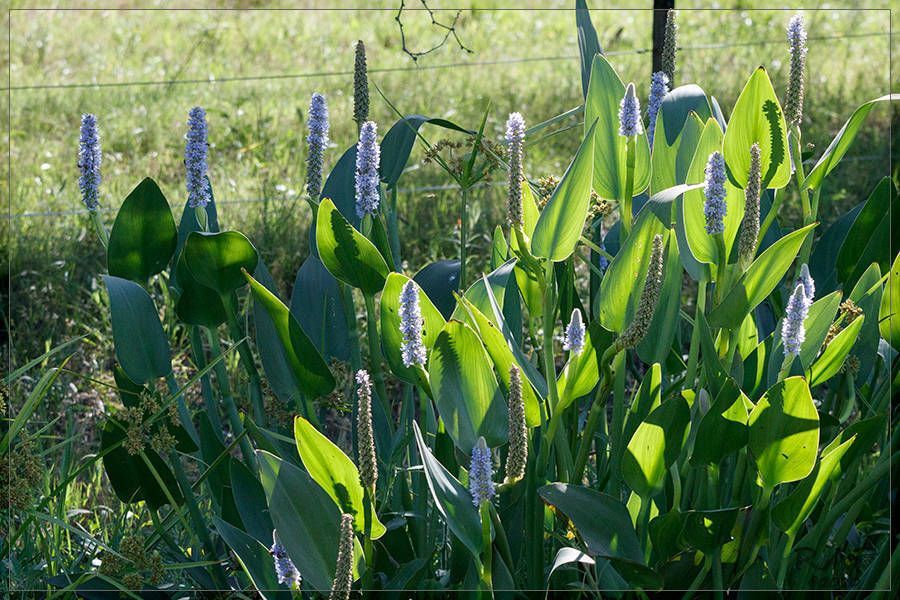
Genus Pontederia
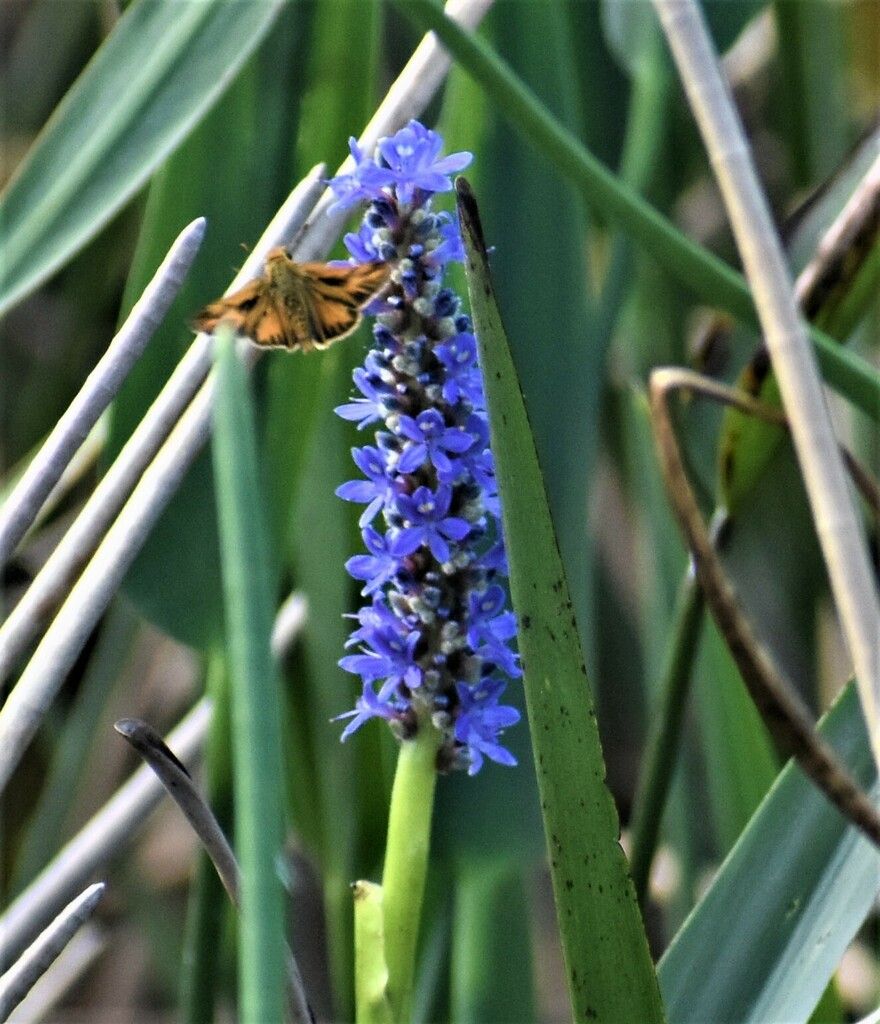
Pickerelweeds are wetland and pond-edge plants in the genus Pontederia, known for upright spikes of purple-blue flowers that are popular with many pollinators.
Plant Type
Aquatic & wetland plants > Pickerelweeds
Aliases
Pickerelweed
Native Range
Parts of North America (varies by species in the genus)
Bloom window
Summer into early fall (varies by species and site)
OVERVIEW
Pickerelweeds (genus Pontederia) are a strong choice for wet gardens because they don’t just tolerate soggy soil—they prefer it. Plant them where water naturally collects, or at the edge of a pond where the soil stays saturated. Once established, they form sturdy clumps with bold leaves and upright flower spikes that add color through the warmer months.
For a simple setup, try a container water garden: use a watertight tub or pot, add heavy soil, set the plant with the crown at the surface, and keep the water level steady. In a rain garden, place pickerelweeds in the lowest, wettest zone so they don’t dry out.
To keep your patch pollinator-friendly, focus on good placement and skip pesticides—healthy plants in the right spot are much less likely to struggle.
FAST FACTS
Essential stats and requirements for quick reference.
| Category | Details |
|---|---|
| Also known as | Pickerelweed |
| Bloom window | Summer into early fall (varies by species and site) |
| Typical height | Knee- to waist-high in many garden settings (varies by species and conditions) |
| Pollinators supported | Bees, Butterflies, Flies |
| Light & moisture | Sun to part sun; wet soil to shallow water |
| Best roles for pollinators | Pond edges, rain gardens, wet ditches, and any spot that stays consistently damp |
SUMMARY
A quick scan of what they do, what they need, and the best first step.
Add bright flower spikes and strong foliage at the water’s edge while supporting visiting pollinators.
Consistently wet soil or shallow water and plenty of light.
Place pickerelweeds where the ground stays wet most of the time—pond margins and rain gardens are ideal.
IMPACT
Key Impacts
RECOGNITION
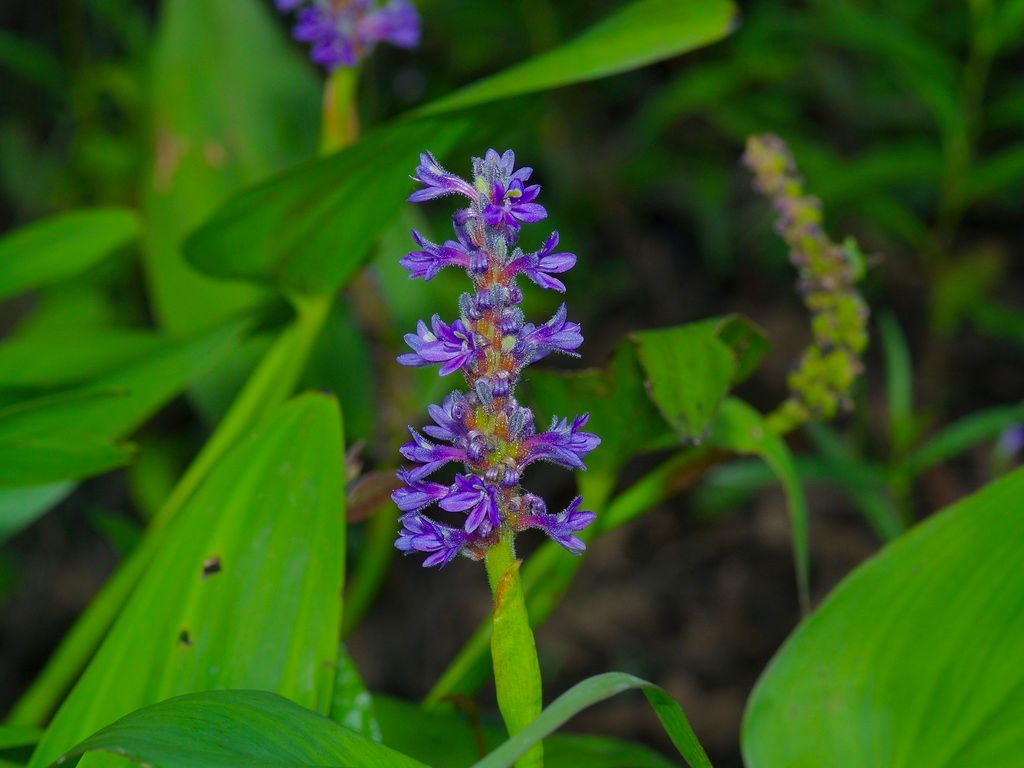
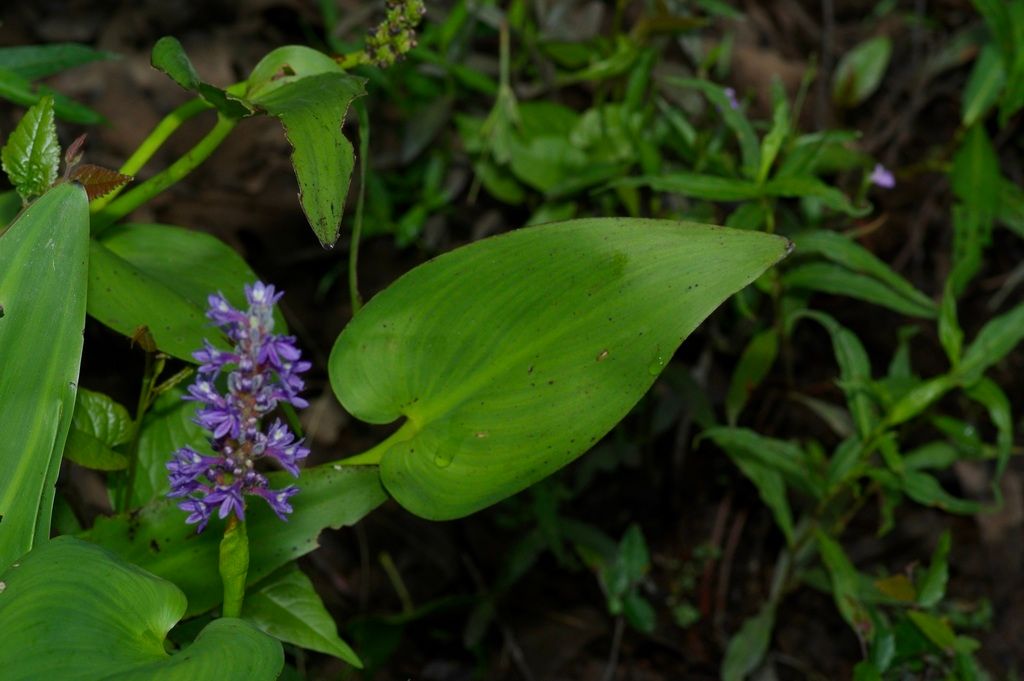
Smooth green leaves in a clump; shape can range from oval to heart-shaped depending on the species and growing conditions.
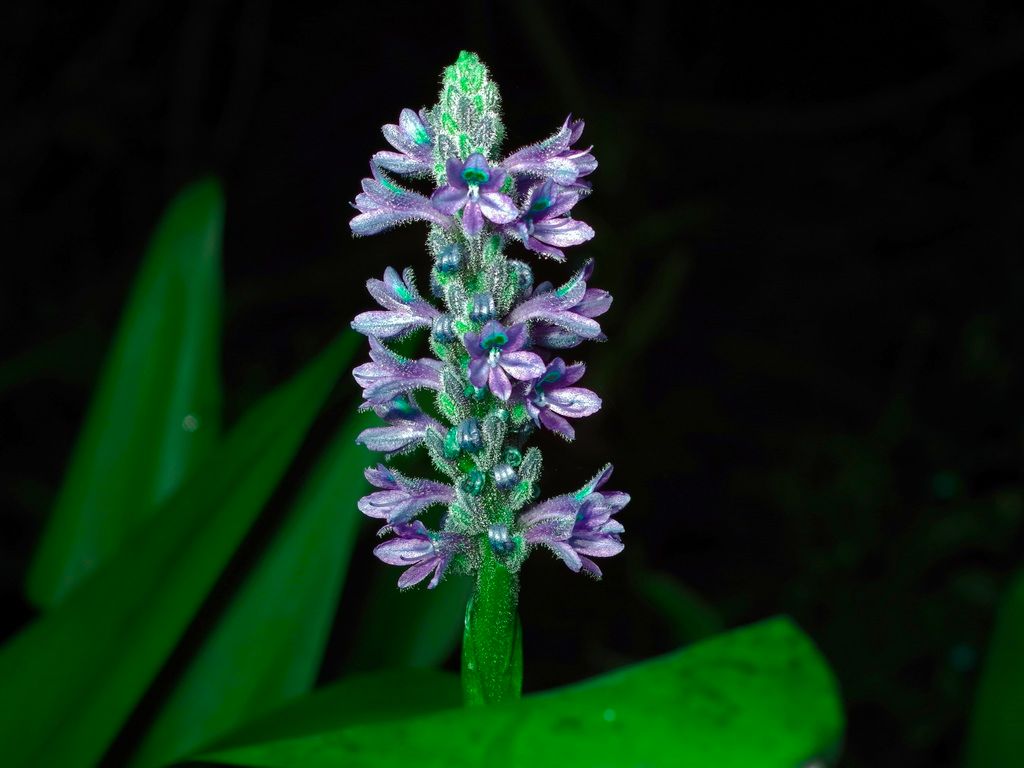
Dense, upright spikes of small purple-blue flowers that open over time along the spike.
After flowering, the spike dries and sets small seeds; the plant remains leafy through the season.
LOCATION
Native environments and the best spots to place it in your landscape.
SEASONALITY
Notes on bloom windows and how this plant helps pollinators across the seasons.
Pickerelweeds typically bloom during the warmer part of the growing season, when many pond-edge plants are at their best.
Bloom Season Role: Mid-to-late season nectar and pollen in wet habitats
REQUIREMENTS
The right mix of sun, soil, and space for healthy growth.
Full sun is best for flowering; part sun can work in consistently wet sites.
Mucky, silty, or garden soil that stays saturated; can also grow in shallow water.
Keep consistently wet; do not let the root zone dry out for long.
Set the plant so the crown sits at the soil surface; in shallow water, anchor in a pot or planting pocket so it doesn’t float or tip.
In wet soils, use mulch lightly (or not at all) to avoid smothering the crown; keep mulch pulled back from the base.
GARDENING GUIDE
Simple steps to plant, prune, and maintain healthy trees without pesticides.
Pairings
Pairing ideas to keep pollinators fed throughout the growing season.
GLOSSARY
Glossary terms are being added.
What You Can Do
Turn this knowledge into action. Whether you plant a single pot or a whole garden, you are building a vital bridge for local biodiversity.
Join the movement to restore our shared habitats.